

























































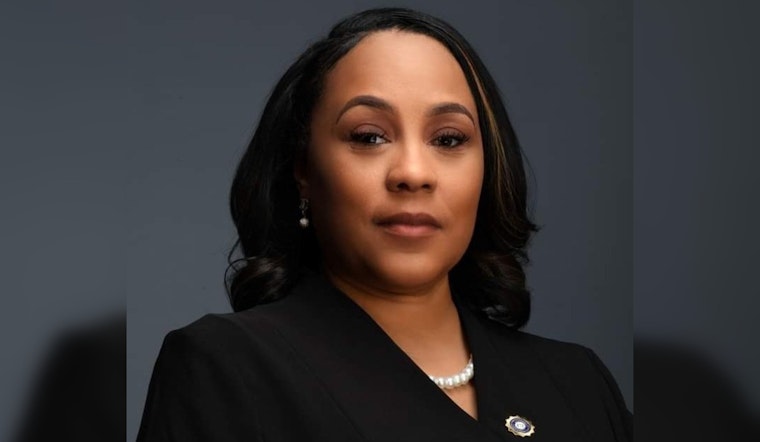
Georgia's political battlefield heated up as lawmakers eyed new measures that could shake the very foundation of legal prosecution in the Peach State. A Georgia commission designed to discipline and potentially remove prosecutors like Fulton County District Attorney Fani Willis from their posts is on the brink of activation, pending the signature of Gov. Brian Kemp. With the Republican governor's endorsement anticipated, this newly empowered body could interrupt the prosecution of former President Donald Trump orchestrated by Willis, as FOX 5 Atlanta reported.
The initiative, propelled through the state House with a 97-73 vote, sidesteps the Georgia Supreme Court's prior rebuff of regulating district attorneys' duties beyond the practice of law. Rep. Joseph Gullett sees the measure as a tool to bring accountability, contending, "Once this bill’s passed, this commission will be able to begin its real work, which is bringing accountability to those rogue prosecuting attorneys who abuse their office." Yet, doubts loom over the measure's aim, with critics labeling it a politically charged weapon to override the electoral will and manipulate the prosecutorial discretion, as highlighted by Rep. Sam Park's condemnation of it being "a partisan attempt to control and discipline prosecutors who hand down decisions that Republican politicians do not like."
Amid the legal skirmishes in the legislature, Fulton County District Attorney Fani Willis found herself at the center of a pointed Senate investigation. Ashleigh Merchant, defense attorney for one of Trump's co-defendants, took center stage at a legislative hearing, laying bare her probe into Willis' romantic involvement with a special prosecutor on the Trump case. Merchant's testimony, recounted from a court hearing debacle, questioned the propriety of financial transactions and potential conflicts of interest between Willis and the prosecutor in question, Nathan Wade. According to an AP News interview, Willis and Wade have recognized their relationship but rejected assertions of impropriety, maintaining that the liaison began post-hire and has not influenced the case.
The Senate committee delved into the nitty-gritty of Wade's appointments and financial compensation, challenging the scant detail in his invoiced hours — an inquiry spearheaded by the committee's Republican chair, state Sen. Bill Cowsert. Merchant was grilled for hours, divulging information fed to her over months, an investigative breadcrumb trail sparked by a chance encounter and amplified by unsolicited counsel from Wade's ex-law partner, Terrence Bradley. The Atlanta legal circle seemed too condensed, too insular, with Bradley initially aiding Merchant's investigation then later withholding confirmation of key details in court testimony.
The committee's exploration of these allegations, thrust into the limelight of legislative attention, underscored an ongoing need to clarify boundaries of appropriate prosecutorial conduct. In an ever-evolving chess match of legislation and litigation, the rules of engagement may shift — those in power enforce new guardrails, but the stratagem of justice continues to unfold in Georgia's courts and capitol alike.





