

























































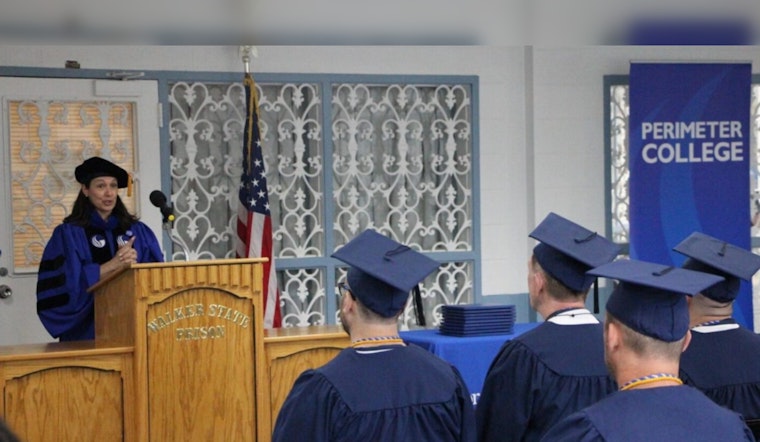
A cherished initiative helping incarcerated individuals to attain higher education is on the brink as Georgia State University (GSU) looks to cut the Prison Education Project (PEP) due to financial constraints. The program, which has been a conduit for hope and change since 2016, is in jeopardy as the university faces a significant budget shortfall.
PEP allowed prisoners at Phillips State Prison, and more recently at Walker State Prison, to pursue for-credit college courses – with last year's graduates walking away with honors. According to WABE, GSU Provost Nicolle Parsons-Pollard cited a staunch commitment to "responsible financial management" as the rationale behind the possible cessation of the program. With a $24.4 million budget cut in Fiscal Year 2024, and the specter of additional shortfalls on the horizon, she said current financial challenges "make it difficult to allocate resources to new initiatives, including the PEP program."
Funding woes loom large over the program's future, as current sources like the American Family Insurance Institute for Corporate and Social Impact and the Laughing Gull Foundation are drying up. GSU spends roughly $180,000 each year on PEP's instructional and administrative expenses, a figure that stands apart from the costs associated with supporting students eligible for Pell Grants to pursue postsecondary education – a new eligibility that came into effect last year.
However, support for PEP is alive and fiery within the GSU community. Madelief Tilder, a GSU student and two-year participant of the program, reflected on the transformative nature of education in the lives of the incarcerated in an interview with WABE. "What I think has always really stood out to me about our program is that for those few hours a week that they're in a classroom, they can be students in the same way that we are," she said. A spirited petition has thus emerged, pushing for discussions with university leaders to salvage PEP.
PEP co-founder Katherine Perry underscored the societal benefits of educating those behind bars, highlighting that a majority will eventually rejoin society. "Ninety-five percent of the people in prisons come back out," Perry told WABE. "Those are going to be our neighbors, and don't we want to have offered them a glimpse at something different than the lives that got them where they were?" Despite this conviction, GSU administration appears unmoved, with talks of phasing out PEP in the next few years, though alternative programs for formerly incarcerated individuals are being considered.
The university's financial crisis has cast a grim shadow over PEP, which has been more than a mere academic program; it has been a beacon of hope for those who have few. The petition "Save GSUPEP" reflecting the community's determination to fight for the project's continuance had garnered around two dozen signatures by March 20, signaling a battle, albeit nascent, for the future of prison education at GSU.





