

























































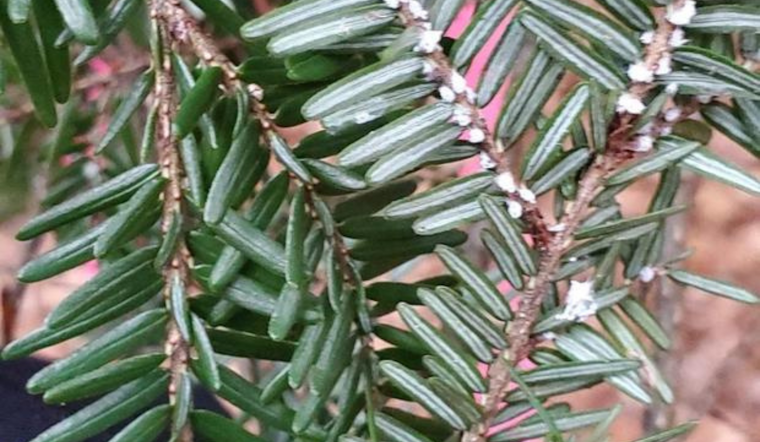
Michigan's ongoing skirmish with an unwelcome guest has expanded as the invasive hemlock woolly adelgid sets up camp in Antrim County. This addition marks the eighth county to report an infestation of the sap-sucking insect that's been putting the state's hemlock trees on the brink, as confirmed by the Michigan Department of Agriculture and Rural Development (MDARD).
Despite its minute size, the pest's impact is anything but small—threatening no less than 170 million trees across the state. The insects have a penchant for extracting life-sustaining sap from hemlock trees, leading to a slow and unfortunate demise over four to ten years if left unchecked. State officials are currently undertaking an "extensive survey" to ascertain the extent of the infestation, according to WOODTV.
Residents are advised to keep a vigilant eye for the telltale signs of the intruders—round, white ovisacs that cling to the undersides of hemlock branches. These ovisacs take shelter near the base of the needles and are indicators of the adelgid's presence, usually observable from November through July. A proactive resident's report post an educational event precipitated the latest discovery of the infestation near Torch Lake, stressing the importance of public knowledge in this ecological battle, as reported by CBS News Detroit.
Addressing the spread, MDARD officials urge the public to not ineffectively try to handle suspected infestations themselves but rather to report any sightings immediately. Photography can assist in confirmation, but physical samples should not be collected. Residents can reach out via email to [email protected] or call 800-292-3939. Further guidance is available on the invasive species section of Michigan’s website, with educational materials and reporting tools provided to assist locals. The collective effort highlights the crucial role communities play in identifying and slowing down the spread of this environmentally damaging pest.
Steve Carlson, the Pesticide and Plant Pest Management Division Director for MDARD, emphasizes the importance of these community efforts. "Situations like this demonstrate the importance of public awareness in our fight against invasive species," Carlson stated, as The Detroit News highlighted. A united front and educated action by Michigan's citizens stand as vital shields against the creeping advance of the hemlock woolly adelgid.




