

























































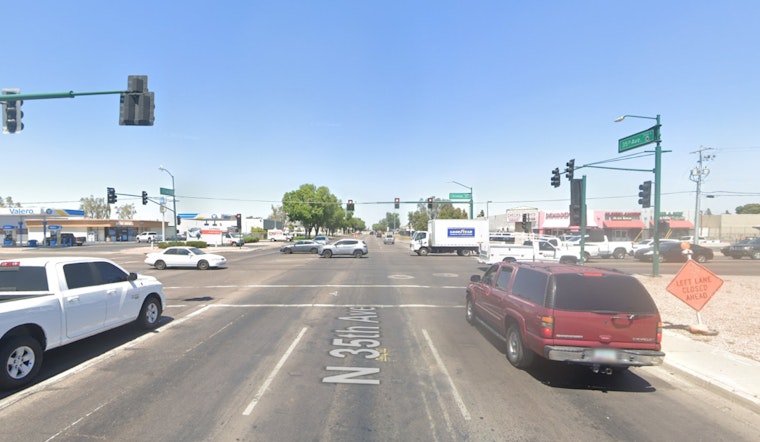
Arizona's roads have turned into a demolition derby with cities like Phoenix and Tucson ranking among the top ten for the most dangerous drivers in America. In a grim tally, Phoenix police reported a total of 13 cars involved in three separate crashes within a mere 24-hour period at one notorious intersection. The accidents at 35th Avenue and Thomas Road resulted in several serious injuries, with victims including a young girl now fighting for their lives, according to 12News.
At one crash, someone needed to be rescued from their vehicle. This happened at an intersection that's already seen a lot of accidents. The Maricopa Association of Governments says there have been 105 crashes there from 2018 to 2022. It's a dangerous spot that worries residents and safety advocates. Stacey Champion, a road safety advocate, said, "I'm not surprised at all. I mean, Phoenix has dangerous streets, as reported by 12News.
The recent vehicular chaos underscores a broader safety crisis on Arizona's roads. Forbes Advisor data analysis places the blame squarely on a recipe for disaster: speeding, drunk driving, and distracted driving are typical ingredients in a lethal concoction that tags roads in Tucson and Phoenix as veritable death traps. This dangerous trend is no secret to safety activists like Champion, who perceive a deadly confluence of high speeds and poorly designed roadways. In a stark assessment shared with 12News, she highlighted the inherent risk of streets “designed for speed” slicing through urban neighborhoods.
The number of deaths from car crashes on Arizona roads went up by 8% in 2022, reaching 1,294 lives lost, according to the Arizona Department of Transportation. Stacey Champion, a road safety advocate, suggests practical solutions like narrowing lanes and adding pedestrian buffers to reduce these tragedies. She believes trees can naturally slow down traffic and create a safer space. Champion emphasizes the importance of prioritizing public health and safety over speed and convenience to bring about real change.
These incidents are not without potential solutions, signaling the necessity for an aggressive re-envisioning of urban roadway policies and designs. Community figures like Champion and former Mesa police officer Joseph Catone, who spent two decades investigating traffic and collisions, understand that beyond aggressive driving lies deeper urban planning flaws and positioned strategies like adding bike lanes and designating street parking to engineer a more cautious driving environment. Their collective voices reveal a truth: the streets are a commonwealth, meant for safe passage, not mere conduits for human error and technological failings. And though the price of progress may be high, the toll of inaction is proving far costlier.





