

























































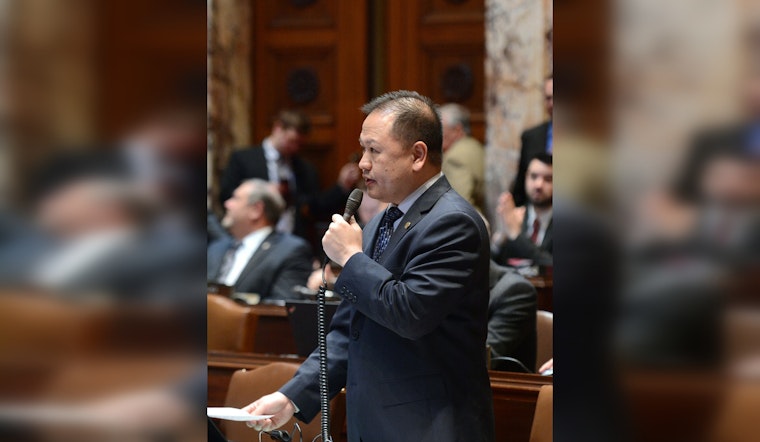
St. Paul's own Senator Foung Hawj steered the conversation towards transportation fairness in the Senate Transportation Committee on Monday, March 11. The legislator introduced three bills aimed squarely at plugging the holes in what he sees as an equity gap in Minnesota transportation services. Hawj's proposed legislation includes plans for a driver's license agent stationed at the Hmong Village Shopping Center, accommodating St. Paul's East Side.
As the wheels of governance turn, Sen. Hawj's push appears to be an attempt to fundamentally reshape not just where services are offered but also to break down language barriers. By placing a facility conveniently within reach of a specific community and providing bilingual support, Hawj is aiming to more easily connect constituents with the services they need. According to a statement given during his testimony, Senator Hawj said, "Ensuring equity in access to information and services is important for a thriving workforce, a healthy economy, and active participation in our communities."
The additional bills—SF 3257 and SF 3250—propose to mandate the Department of Public Safety to provide bilingual services and to require an open-bidding process for the appointment of replacement deputy registrars, respectively. If passed, these measures will not just serve to aid the Hmong community exclusively but also extend to non-English speakers statewide. It's a legislative package that has the potential to go beyond the East Side's borders, setting a precedent for more inclusive transportation policies across Minnesota.
The senator's emphasis is heavily on inclusion and service quality, and it would seem to broadly enhance opportunities for all immigrants and non-native English speakers. "My legislative proposals are inclusive, improve quality of service, and build opportunities for communities to actively engage in resources available to them," Hawj stated in his testimony. "Language diversity is prominent across our state and by removing barriers to accessibility, non-English speakers can receive the information needed to obtain a driver’s license." These statements underline a commitment to do better by Minnesota's diversifying population.
This legislative stride by Sen. Hawj is awaiting the green light from his colleagues on both sides of the aisle. As the senator looks to the horizon for his proposals, the success of these bills could very well drive Minnesota toward a more equitable transportation model.





