

























































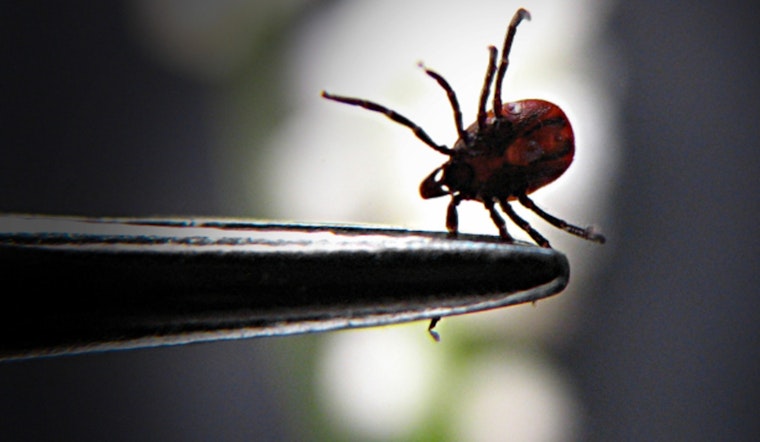
In a remarkable discovery the might lead to new protections against Lyme disease, scientists at MIT and the University of Helsinki have identified a protein in human sweat that appears to fend off the infection-causing bacteria. Despite progress in treatment, the disease currently impacts approximately 500,000 Americans annually, presenting with symptoms ranging from fever to long-lasting fatigue and joint pain.
It turns out about one-third of us carry a genetic variation of this sweat protein that isn't quite the disease fighter its counterpart is, making some more susceptible to Lyme disease, researchers revealed while tracing genetic markers that could influence a person's susceptibility to the bacterial infection. This particular protein, a secretoglobin dubbed SCGB1D2, when in its normal form, has shown considerable effectiveness in reducing Borrelia burgdorferi growth, the bacteria responsible for Lyme disease, however, a variant seems to require a heftier amount to suppress the same bacterial growth, the study published in Nature Communications reported.
Michal Caspi Tal, an MIT principal research scientist involved in the study, highlighted the potential applications of their findings saying, "This protein may provide some protection from Lyme disease, and we think there are real implications here for a preventative and possibly a therapeutic based on this protein." In dramatic contrast to lab-altered variants, the bacteria exposed to the normal protein were found substantially less effective at infecting mice, a result that didn't just delay but fully prevented infection, Tal stated in an interview with MIT News.
The research, also conducted with data from the Estonian Biobank, is prompting further investigation into the ways this protein can be used in skin applications to potentially thwart infections in humans, especially considering that a certain proportion of patients do not recover from Lyme disease with antibiotics alone, a concerning fact pointed out by Tal, who added that there has been virtually no progress in developing treatments for this subset of patients over the past four decades. In light of these developments, the scientific community is showing increased interest, with industry experts pondering if the protein could even be effective against other skin infections.
Alongside uncovering likely applications for SCGB1D2, scientists are being beckoned down a path of inquiry regarding the broader role that secretoglobins might fulfill within the immune system. In an exciting twist for immunology researchers, such as Tal who told MIT News, "I want to know what they all do," the study opens up potential new frontiers for understanding and harnessing our body's natural defenses. The research, which has shed light on a surprising molecular protector within our midst, was supported by various foundations including the Instrumentarium Science Foundation, the Academy of Finland, and the Bay Area Lyme Foundation.





