

























































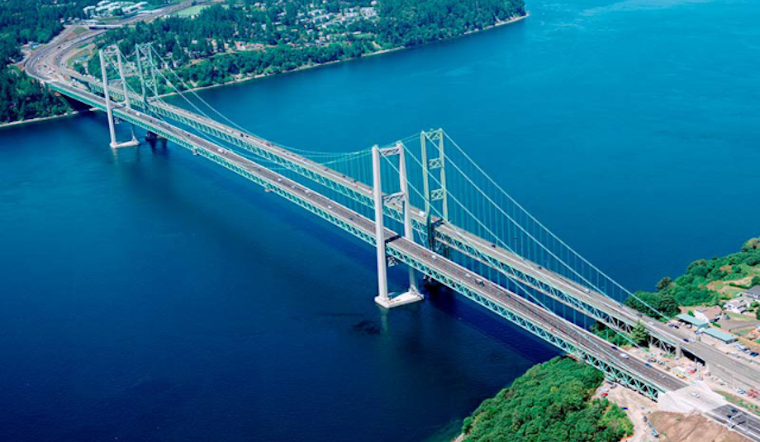
Commuters crossing the Tacoma Narrows Bridge will be digging into their pockets for toll fees a little longer than they anticipated, thanks to lingering construction debts. The Washington State Transportation Commission revealed that the eastbound lanes of the bridge, financed by $681 million in sold bonds and completed in 2007, still have an outstanding balance of over $586 million. The toll booths, a familiar albeit unwelcome sight for many, won't be retiring anytime soon, as financial analyst Aaron Halbert noted that the bond debt won't be squared away until fiscal year 2030, as reported by KING 5.
But it's not just about the bonds, running the gauntlet of paying back $57.6 million in deferred sales tax, according to Halbert, adds another year to the financial burden of commuters using the bridge as it's slated for fiscal year 2031. A loan from the state tacks on an additional two years of toll payments, stretching to fiscal year 2033, Halbert explained at the recent Washington State Transportation Commission meeting. This information was provided during a Feb. 29 virtual update with The Gateway, and Aaron Halbert confirmed this extended timeline, as covered by The New Tribune.
The outcome of this prolongation spells trouble for local businesses near the bridge, such as Gig Harbor Strength and Fitness. Battling the aftermath of a pandemic and a fire, the gym's owner, Coach Dimitri Melnyk, expressed concerns that the tolls discourage clientele. "It's just a barrier, I think, for business," Melnyk told KING 5. With gym goers calculating the added expense of tolls to their fitness investments, many are forced to reconsider the viability of memberships across the bridge.
For residents of Melnyk's surrounding community, the extended tolls mean adjusting household budgets and travel plans. Melnyk outlined the reality for his clients, stating that "a gym membership, if you use it on average three times a week, you’re looking at twelve tolls a month, that’s $72." In combination with the costs of gas and membership fees, these expenses accumulate to nearly "$200 investment, almost," Melnyk remarked to KING 5, sparking concern over the financial strain on consumers and the ripple effect on local commerce.





