

























































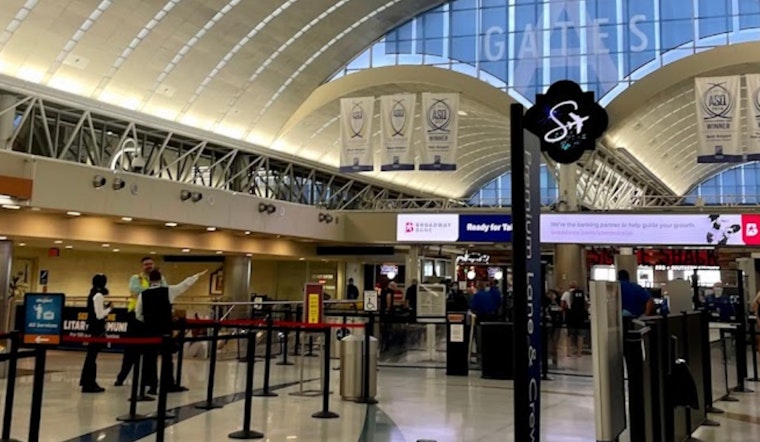
In the Lone Star State, travelers might notice something different the next time they're queuing up for security at the airport. The Transportation Security Administration (TSA) has implemented biometric facial recognition technology to beef up security at various Texas airports, aiming to streamline identity verification and keep those lines moving smoothly. The hi-tech solution involves cameras and screens comparing passengers’ faces and photo IDs, ensuring identification isn't fraudulent.
The biometric system, which was first piloted three years ago at Virginia's Ronald Reagan Washington National Airport, is now operational in over 200 U.S. airports, as per information from Customs and Border Protection analyzed by Spokeo. Texans can encounter this tech at hubs including San Antonio International Airport, Midland International Airport, and George Bush Intercontinental Airport, among others. Although this bit of innovation could speed up checks and reduce human-to-human contact, not all passengers are boarding the convenience bandwagon. Some, as KSAT reported, harbor concerns over privacy and potential misuse of their facial data.
Airports across the state, from Austin-Bergstrom International to the smaller Addison Airport, have rolled out this feature. The advancement comes as the latest upgrade in a history of biometric use for foreign nationals entering the U.S. and builds on technology developed as far back as the '60s by computer scientist Woodrow Wilson Bledsoe. With today's machine learning capabilities, databases can be mined to improve the accuracy of predictions, potentially refining the tech's effectiveness.
International counterparts have taken up the facial recognition mantle as well, from Canada to the United Arab Emirates, aimed at aiding their security processes. Australia's gone a step further, allowing travelers to submit passport information electronically via smartphone, the passport photo is whisked off to authorities without passengers needing to flash their documents at customs which renders a passport's physical presentation unnecessary, MySanAntonio.com explains. Yet, interrogations over privacy remain, spotlighting concerns like data retention and racial bias in algorithmic identification, with Harvard research underscoring the latter with troubling statistics.
Attempting to address such concerns, the TSA has maintained a 99% facial recognition success rate claim and assured that images captured during the process will neither be stored nor used for profiling or surveillance. However, despite these assurances, and the option for passengers like Oregon Sen. Jeff Merkley in 2023 to opt-out for manual screening, worries linger. CBS News noted some information from this advanced screenings might be retained for up to two years to facilitate the system's assessment, leaving a lingering question mark above the heads of tens of thousands of travelers.



