

























































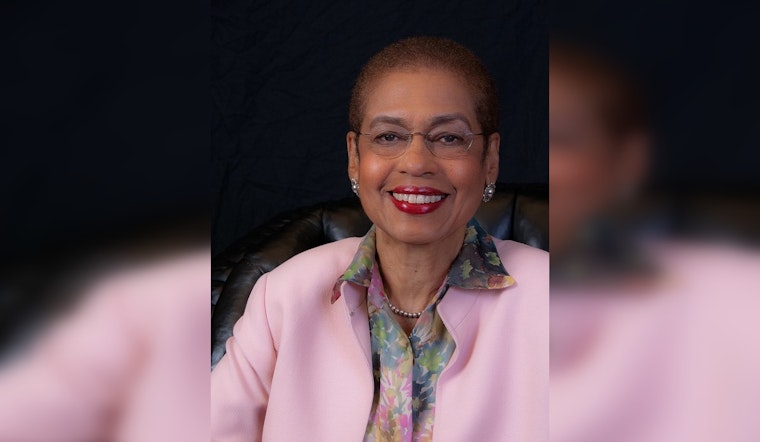
Washington D.C.'s battle for self-governance has hit a new flashpoint, with Congresswoman Eleanor Holmes Norton (D-DC) slamming a pair of bills aiming to roll back local laws as "undemocratic" and "paternalistic." The contentious legislation was put under the microscope during a recent Committee on Oversight and Reform (COR) markup, which saw voting on measures that could seriously affect the autonomy of the District's own governance.
The first bill, tabled by Republican Rep. Byron Donalds of Florida, would bar alterations to existing criminal sentences in D.C., impose adjustments on the District's criminal code dealing with juveniles, and necessitate the public release of youth crime statistics. Meanwhile, the second piece of legislation, courtesy of Rep. Anna Paulina Luna, another Florida Republican, targets the repeal of D.C.'s newly established vehicle emission restrictions. Norton called out these Republican maneuvers, stressing the importance of respect for local legislative processes. According to a statement on Norton's official website, "My Republican colleagues are correct that Congress has the constitutional authority to legislate on local D.C. matters, but their assertion that Congress has, a constitutional duty to do so is wrong."
Norton's firm stance underscores the tension between federal and municipal powers, a long-standing issue for D.C., which lacks the full autonomy afforded to other American states, despite its residents being subject to federal taxes and legislation. The committee's actions reflect a larger question about the role Congress should play in the laws and regulations that govern the District's residents, especially given that the officials pushing these bills do not represent the District of Columbia.
Rebuking the perceived intrusion, Norton's declaration added a personal rebuke to the lawmakers seeking to influence D.C. legal matters. "To suggest that members of Congress representing Florida know, or care more about public safety in D.C. than D.C.’s locally elected officials is patronizing. They need to keep their hands off D.C.,” she stated vehemently. This ongoing debate, braced by Norton's defiance, signals a deep-seated struggle over the breadth of D.C.'s self-rule, sparking discussions on the essence of democratic representation and the rights of local governance.





