

























































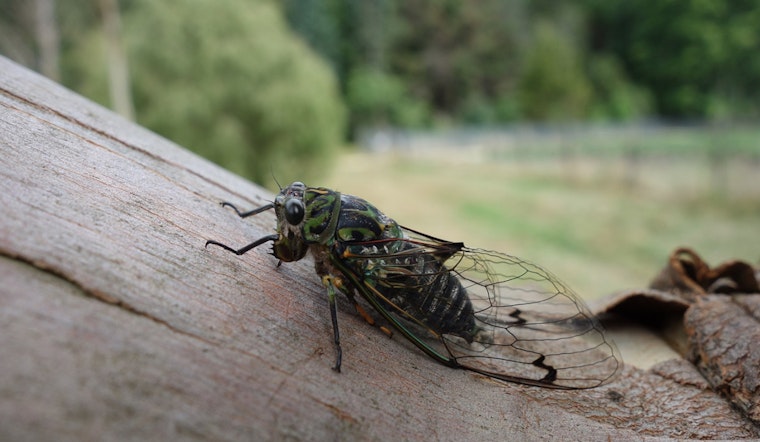
The buzz in Georgia this summer is set to be historic, as the periodical cicada is slated to make its once-every-13-years appearance. According to WABE, these insects, known formally as the Great Southern Brood, boast yellow wings and distinct red eyes, differing in both look and sound from the cicadas that typically frequent the southern states each summer.
Come early summer, Georgia will play host to millions of these cicadas as they break ground and fill the air with their unique chorus. Entomologist Nancy Hinkle of the University of Georgia, who normally devotes her studies to blood-feeding arthropods such as ticks, shared her expertise saying, "Periodical cicadas are black with red eyes, bright red eyes, and they have orange transparent wings," contrasting with the larger green annual cicadas with black eyes, that are seen and heard more commonly throughout the year. If you hear a cicada before June it's likely to be from the periodical breed, she told WABE.
The life span of these insects borders on the wondrous, living nearly 13 years in a larval state underground before surfacing to reproduce and then die, achieving their entire adult life cycle in a swift burst before June. "These cicadas have been living as immature as babies underground for 12 years and 11 months, almost 13 years, but they’re gonna come out, change into adults, mate, and start the next generation, all before June," detailed Hinkle in a conversation with WABE.
While the precise reasons for their unique time intervals of emergence remain a scientific mystery, theories abound. It's believed the cicadas, which feed on tree root sap, are influenced by changes in sap flow and soil temperature—a necessary 64 degrees Fahrenheit signals it's time for them to emerge. Far from being pests, these cicadas actually contribute to the ecosystem as they offer a sudden influx of nutrients for various wildlife. "All these nutrients have been underground for 13 years, and the cicadas now are bringing them above ground, and apparently everything out there eats cicadas!" Hinkle exclaimed to WABE.
These periodical cicadas are concentrated more heavily in northwest Georgia, as Hinkle noted from the last emergence in 2011. However, Atlanta's urban sprawl may mean fewer if any, sightings within the metropolitan area itself. Nature enthusiasts are encouraged to head northwards around Mother's Day when the spectacle is expected to peak, where they might observe these poor fliers helter-skelter descent to become a feeding frenzy for the local fauna. Hinkle advised that those looking to witness this fascinating natural event should seek out older forests and even cemeteries, home to the deciduous trees the cicadas prefer.





