

























































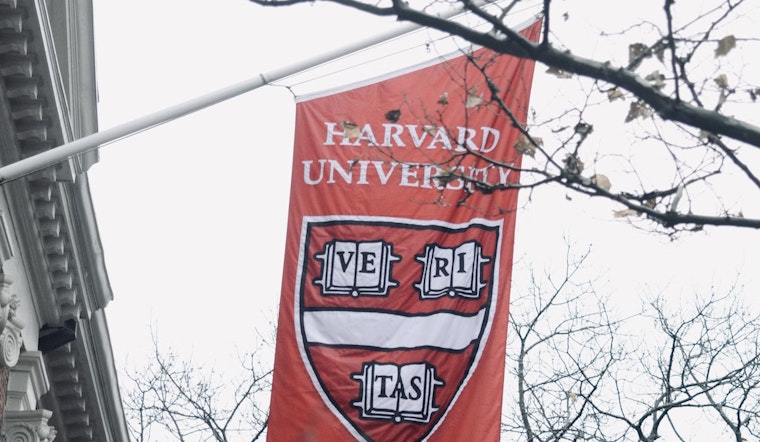
In a marked departure from its recent policy decision, Harvard University announced it will reinstate standardized testing requirements, a decision that thrusts them into alignment with a cohort of elite institutions that have recently swung back to traditional admissions practices.
The Ivy League school joins the ranks of Brown, Yale, Dartmouth, M.I.T., Georgetown, Purdue, and the University of Texas at Austin, all of which have already reembraced the inclusion of SAT or ACT scores in their admissions criteria. CalTech, a leading science and engineering institute, echoed Harvard's policy shift hours later, mandating test scores for those aiming to secure a seat in the fall 2025 class, according to The New York Times.
The reinstatement of test requirements signals a broader insistence on traditional metrics despite earlier pandemic-necessitated leniency. Harvard, initially pledging to remain test-optional through the entering class of fall 2026, recanted, setting a new precedent for students applying for fall 2025 admission.
Harvard officials emphasize the predictive value of standardized tests in their admissions process. Dean of the Faculty of Arts and Sciences Hopi Hoekstra detailed, "Standardized tests are a means for all students, regardless of their background and life experience, to provide information that is predictive of success in college and beyond," in a statement obtained by The Crimson. Harvard's decision rides on the coat-tails of findings by Opportunity Insights that test scores purportedly offer robust indicators of prospective college success, ranking above high school GPA in predictive strength.
While the universities contend that the reintroduction of test mandates is a stride towards objectivity and inclusivity in identifying talent, dissension brews among student groups and advocacy organizations. The Generational African American Students Association at Harvard denounced the move on Instagram, stating it undermines the progress towards equal opportunities in higher education, as reported by The Crimson. Concurrently, FairTest, a staunch critic of standardized testing, remains unconvinced of the tests' purported fairness and efficacy in the admissions process. Robert Schaeffer, director of public education at FairTest, called into question the robustness of Opportunity Insights' analysis, pointing to critiques suggesting test scores fall short of GPAs in predictive reliability once economic advantages are discounted, The New York Times reports.
Nonetheless, Harvard assures that test scores will be contemplated alongside a spectrum of other criteria, such as the applicant's experiences, talents, and contributions to their communities. The policy, described as "exceptional cases," will accept alternative exam scores like Advanced Placement or International Baccalaureate for students unable to access the SAT or ACT, noted Harvard in the announcement sourced from AP News.




