

























































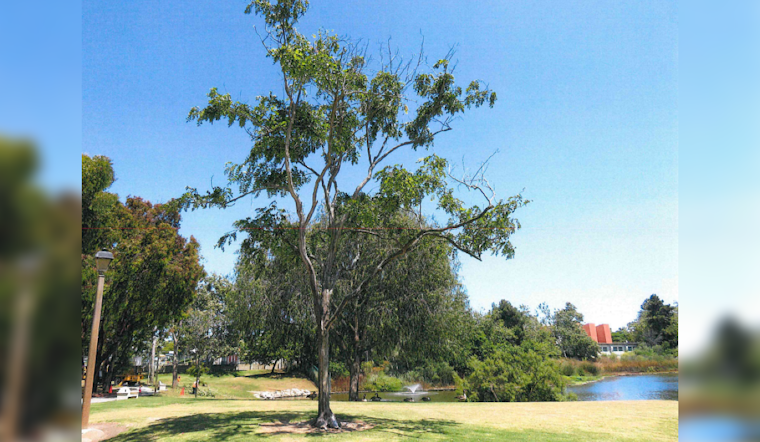
Polliwog Park is getting a major green makeover, but not without saying goodbye to some longstanding leafy residents. The park's officials have marked 17 trees for removal due to various health concerns, including infestation and disease. Among the condemned are seven eucalyptus trees in the grips of the Eucalyptus Longhorned Beetle, and seven pine trees suffering from Pine Pitch Canker, according to a bulletin issued by the city of Manhattan Beach.
According to the City of Manhattan Beach bulletin, the borer beetle and the pitch canker are indeed a serious threat to tree health. The beetles have been boring into eucalyptus trees since the '80s, laying eggs under the bark and leading to the disruption of water and nutrients when their larvae hatch. Similarly, Pine Pitch Canker, first spotted in California in the '80s too, has been rapidly spreading in the area. Falling trees for selective thinning and structural issues not only highlight the challenges faced by park management but also the delicate balance required to maintain a thriving park ecosystem.
In a move toward increased biodiversity, the city isn't just removing trees, they're planting a fresh crop of 78 new ones from eight different species. Visitors to Polliwog Park can look forward to seeing White Alder, Coast Live Oak, Big Leaf Maple, Fremont Cottonwood, and California Sycamore among the new additions. Non-native species such as the Tipu Tree, Weeping Boer-Bean, and Silky Oak are also set to take root, providing a mix of drought-tolerant options, which help in conserving water – an especially prudent choice given California's history with drought.
The bulletin further details that these new trees aren't just selected for their resilience. The White Alder and Big Leaf Maple, for instance, were chosen for their ability to grow rapidly and provide food resources for wildlife. The city's intention is clear: to foster an urban green space that supports local biodiversity while adapting to the environmental challenges of the region. Several trees like the Coast Live Oak and California Sycamore that are already found in Polliwog Park will reaffirm the native character of the area. An evergreen and fast-growing, Silky Oak, with its nectar-rich flowers, has been brought from Australia to attract birds, too.
This reforestation effort not only mitigates the loss of diseased and damaged trees but also promises a bolder, more diverse canopy for the future of Polliwog Park. Park-goers can expect more shade, more bird song, and more robust tree life in the coming years. Curious locals and tree enthusiasts can track the progress of the park's new leafy landscape through updates provided by the city.





