

























































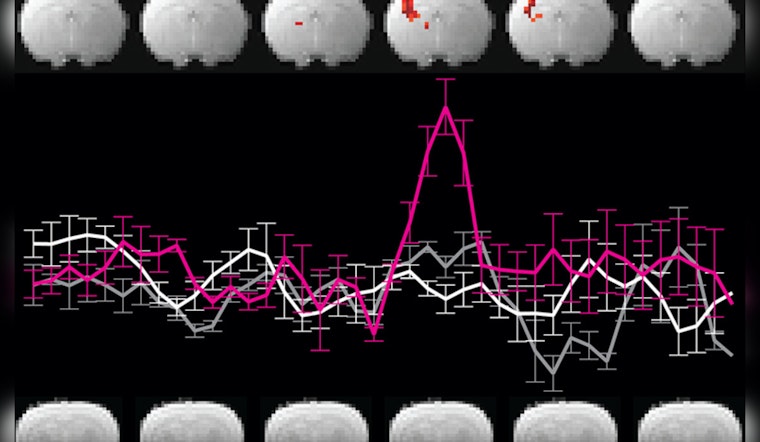
A much-touted MRI method that was believed to directly observe brain neurons firing has turned out to be more of a false alarm than a breakthrough, MIT scientists have discovered. The technique, initially hailed as a new frontier in neuroscience, is actually producing signals caused by its own machinery, rather than by the activity of neurons, as claimed in a report by the MIT News.
Last year, the neuroscience community was abuzz with talk of a revolutionary MRI procedure known as DIANA ("direct imaging of neuronal activity"). Proponents of DIANA asserted it could catch the swift electrical conversations between neurons — something current functional MRI methods are too slow to accomplish. However, an in-depth study led by MIT Professor Alan Jasanoff revealed that the signals triggered by DIANA were, in reality, artifacts of the imaging process itself.
Jasanoff's investigation into DIANA was driven by curiosity about what the method was truly capturing when it purported to register brisk neural activity. "Everyone wants this," Jasanoff told MIT News. "If we could look at the whole brain and follow its activity with millisecond precision and know that all the signals that we’re seeing have to do with cellular activity, this would be just wonderful." Yet upon experimentation, the MIT team found that the technique didn't live up to its claims, as even water tubes, absent of any neural tissue, generated similar MRI signals as live brain tissue under DIANA.
Valerie Doan Phi Van, a postdoctoral researcher on Jasanoff's team, initially thought she'd replicated the neonatal signals that DIANA was designed to pick up. But further probe cast a shadow of doubt over her initial findings: "I was able to reproduce it," she said, referring to her initial success with the method. "I could see the signal." Yet when she disengaged the apparatus meant to stimulate neural activity and replaced the subject with a tube of water, the MRI still registered signals, undercutting the method's legitimacy.
The faulty trigger in DIANA, a pulse program used to synchronize imaging with neural stimulation, was identified as the source of the false signals by altering parts of the code inside. The mystery signals vanished when the program was changed, exposing a major flaw in the DIANA method. As experiments showed, small alterations to the imaging process could cause these misleading signals to come and go. Jasanoff's team felt it crucial to share their findings, in light of the ongoing search for accurate neuroimaging techniques. "If people want to try to repeat any part of the study or implement any kind of approach like this, they have to avoid falling into these pits," Jasanoff underscored.
While the original DIANA study turned out to be a dead end, the debacle has not dampened the spirits of researchers in the field. MIT's team commends the original authors of the DIANA study for their bold attempt to advance neuroscience. The journey to map the brain's activity with precision continues, now more informed by the better understanding of the pitfalls to avoid.





