

























































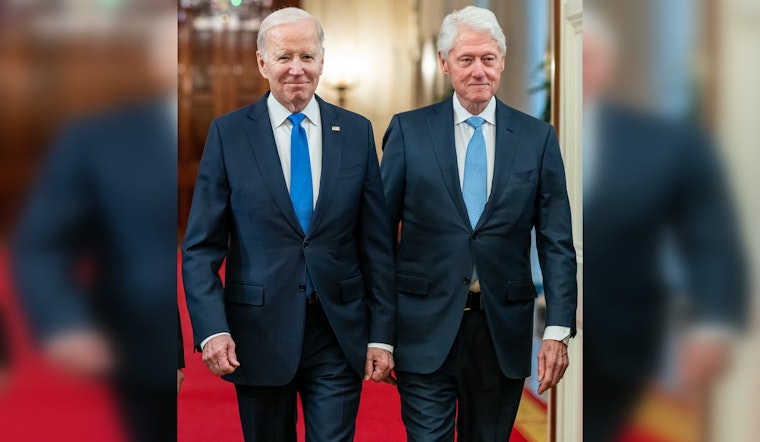
In a gesture to honor the somber history of genocide and to show solidarity with Rwanda, President Biden has named a delegation headed by former President Bill Clinton to attend the 30th anniversary of the genocide against the Tutsi, known as Kwibuka 30. This event, taking place on April 7 in Kigali, reflects on one of the most harrowing chapters in human history.
The delegation includes notable figures such as the United States Ambassador to Rwanda, Eric Kneedler, and the Assistant Secretary of State for African Affairs, Mary Catherine Phee, both of whom possess a deep understanding of the region's complex dynamics and the U.S.' commitments to human rights on the continent. They, along with the Special Assistant to the President and Senior Director for Legislative Affairs at the National Security Council, Casey Redmon, and USAID’s Assistant Administrator for Africa, Monde Muyangwa, embody the nation's resolve in acknowledging past atrocities while fostering hope and supporting Rwanda's journey to reconciliation and renewal.
Details about the delegation's objectives and schedule remain scant; however, the presence of such a high-profile envoy – most notably helmed by President Clinton, whose own administration faced intense scrutiny for its response to the genocide – sends a significant message in terms of the U.S.' acknowledgment of historical events and their aftermaths.
This commemoration underscores the ongoing struggle not merely to understand the incomprehensible tragedies of the past but to use that understanding as a foundation to thwart such darkness from seething into the fabric of our present and future. President Clinton, well-accustomed to the grand stage of global diplomacy, mirrors the weight of a history that cannot, should not, be elided – rather, it stands as a testament to the suffering endured and the resilience birthed in its wake.
The world watches on as Kigali becomes a hub of remembrance, introspection, and a beacon calling for never again – a phrase that echoes all too frequently without the anchoring necessary to render it concrete in the actions of nations. By way of respect and for the sake of forging better tomorrows, the U.S. delegation will join Rwanda in mourning and in hopeful anticipation of what lies ahead. No single gesture can suffice in encountering the vastness of such a historical wound, but the world stage offers a place where gestures accumulate, amounting to the beginnings of understanding, according to details provided by The White House.





