

























































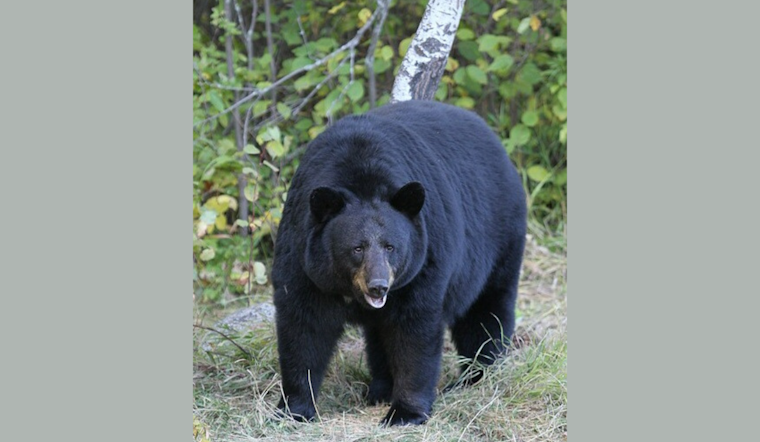
A black bear made itself at home in Ludington, Michigan, on Thursday, taking a stroll through the beach town and causing quite a stir among residents and authorities. Around 8 a.m., the Ludington Police Department responded to sightings of the bear in the vicinity of Tinkham Avenue and N. Sherman Street, not far from U.S. 10, and by noon they announced the creature had been "safely returned to its natural habitat," as reported by CBS News Detroit.
The bear's adventure didn't stop there; it was later seen to be meandering in the area of Staffon and Mitchell streets. To safely manage the situation, Michigan State Police and the Department of Natural Resources pitched in to assist local police. The roaming bear prompted local schools to go on lockdown. One Trinja Henderson caught the bear's alleyway excursion on video, which swiftly circulated on social media.
In a statement given to WZZM13, Rachel Lincoln, the wildlife outreach coordinator for the Department of Natural Resources Wildlife Division, relayed that Michigan's lower peninsula's northern region boasts a "very healthy bear population." Lincoln mentioned that approximately 2,500 black bears now inhabit the area, a 55% increase since 2012. Notably, the bear distribution has expanded by 70% over the past decade, with more sightings in locations like Traverse City, Gaylord, and Cadillac.
To encourage the bear to vacate the premises and climb down from a tree, a pepper ball gun was fired multiple times. This intervention by the authorities was reported by Mlive. "When faced with humans in the fight or flight response, they're almost always going to flee if they feel like they've got the opportunity to do so," Lincoln said, per WZZM13. She advised the public to make themselves appear big and make noise to inform the bear of their presence while giving it room to escape.
As bears come out of hibernation and on the hunt for food, locals are reminded to remove bird feeders, a bear attractant, to prevent them from drawing closer to human habitats. Lincoln underscored that bird feeders, laden with around 19,000 calories, could lead bears from snacks to trash and potentially closer encounters with residential areas. With the arrival of spring, as trees fruit and insects hatch, Lincoln assured that natural food sources should suffice, allowing residents to rehang their bird feeders without attracting furry visitors.





