

























































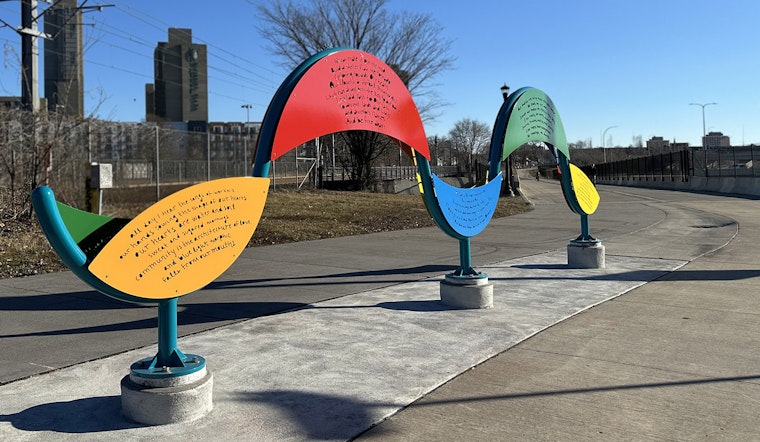
Minneapolis just scored a new symbol of diversity and cultural connectivity, with a large dollop of artistry to sweeten the deal. A unique piece of public artwork named "Common Currents" was unveiled this Tuesday, paying homage to the late Hussein Samatar, the first Somali American to crash through the glass ceiling and clinch a position in Minnesota's public office. Erected at the ends of Samatar Crossing – the stretch of pavement that bridges Cedar-Riverside and downtown Minneapolis – it's no small footnote. It's a fitting tribute to a man whose life's work was, quite literally, about building bridges.
Mayor Jacob Frey, was on hand to do the honors, alongside the city's Department of Arts & Cultural Affairs. He waxed poetic about Samatar's unwavering dedication, saying, "It’s fitting that the legacy of Hussein Samatar is represented in a bridge from Cedar Riverside to downtown because throughout his life as a servant leader – he was that bridge for our immigrant community," as reported by the City of Minneapolis's official news page. Truly, for a city that's long prided itself on its cultural tapestry, this piece is more than just eye candy.
The artwork, brought to life by local artists Ifrah Mansour, Aaron Marx, and Randy Walker, adorns the city with its wave-like metal panels, colorful enough to catch any eye. These aren't just pretty sheets of metal, though. They've been inscribed with poetry by homegrown talents like Sun Yung Shin and Ahmed Said Salah, and their words strike at the heart of Samatar's ethos: immigration, culture unification, and yes, bridging gaps. The city's Arts and Cultural Affairs Director Ben Johnson lauds the sculpture as a monumental nod to the Cedar/Riverside community and its unique essence.
During the dedication ceremony, which started at one end of the eponymous bridge on May 28, a procession of attendees traipsed to its center to hear the featured poets deliver their stirring compositions. Mayor Frey again took the spotlight at the east end, flanked by City Council Member Jamal Osman, and Ubah Jama, Samatar’s spouse who was there to accept words of thanks on behalf of the whole family for the city's gesture. The artwork, as Johnson puts it, "symbolically honors the legacy and history of Hussein Samatar, and we are so proud of the public art team for administrating this important project," cementing the sentiment that Samatar's story, and the inspiration it continues to spark, isn't going anywhere.
Hussein Samatar's rise from an immigrant who arrived on American soil in 1991, to a cornerstone of Minnesota's socio-political framework, is the stuff of Minneapolis legend. His founding of the African Development Center in 2004, remains, a boon for immigrants looking to forge a life in the Gopher State. And though Samatar's tenure was cut short by his untimely passing in 2013, his presence lingers – not just in the hearts of those who knew him, but now, in the very infrastructure of the city he called home.




