

























































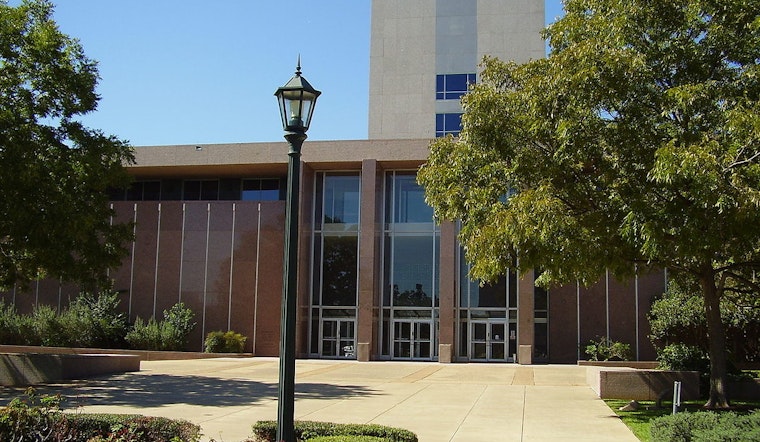
The legal battle over Texas' restrictive abortion laws experienced a significant development as the Texas Supreme Court decisively turned down a prominent case challenging the legislation. The unanimous ruling on Friday stated that the medical exceptions in the law were sufficiently broad to withstand constitutional objections. The high-profile case, Zurawski v. Texas, initially featured five women who claimed Texas' stringent abortion laws prevented them from accessing vital medical care for their complicated pregnancies, an ordeal that eventually drew in 20 women and two doctors.
In Zurawski v. Texas, the crux of the argument hinged on the clarity of the exceptions the law provided for complicated pregnancies. Lawyers representing these women argued that medical practitioners were left in a quagmire of legal uncertainty, thus endangering the lives of their patients. However, the Texas Supreme Court’s verdict upheld the law, advocating for its clarity and confirming that a physician must rely on "reasonable medical judgment," rather than the more flexible "good faith judgment," as previously determined by a lower court's injunction, as reported by The Texas Tribune. The court decreed that for a doctor to be prosecuted, the state would have to establish that “no reasonable physician would have concluded” that an abortion was necessary, as stated in the same report.
Justice Brett Busby, writing a concur. Issued a separate yet concurring opinion that left a window open for possible future legal wrangling over the vagueness of the law. This may yet embolden other challenges, contrasting with the predominant court opinion that favored the state’s arguments.
Friday's ruling brought a close to a contentious legal clash that captured the nation’s attention, particularly after the heart-wrenching stories of women like Amanda Zurawski—the lead plaintiff—became public. Zurawski suffered a harrowing experience when her waters broke early and doctors, citing extant laws, refused to perform an abortion while there was still a fetal heartbeat. She eventually developed sepsis and sustained permanent injuries, a scenario that she relayed in front of state legislators with appeals for them to take corrective action. “The people in the building behind me have the power to fix this, yet they’ve done nothing,” Zurawski told The Texas Tribune, signaling not just her own plight but the broader fears of pregnant Texans.
The obstacles faced by these women are daunting examples of what can transpire in the shadow of such prohibitive laws. Another plaintiff in the suit, Lauren Hall, shared her tale of a pregnancy doomed by the absence of a brain and skull in the fetus—a condition that would ensure no chance of survival post-childbirth. Texas’ laws, peculiar in their stringency, offered her no remedy other than to carry the doomed pregnancy to full term or seek care outside the state’s borders. Hall’s harrowing journey to Seattle, where she terminated her pregnancy, further underscored the strife and turmoil inflicted by the Texas statute, a situation she publically railed against as inhumane and degrading.
As the nation's legal landscape continues to change in the wake of Roe v. Wade's overturning, cases like Zurawski v. Texas are setting precedents for the scope and application of abortion laws across the states. While the recent verdict from the Texas Supreme Court solidifies the current state law, the murmurings of dissent within the court's ruling hint at ongoing debates and the potential for future legal contentions.





