

























































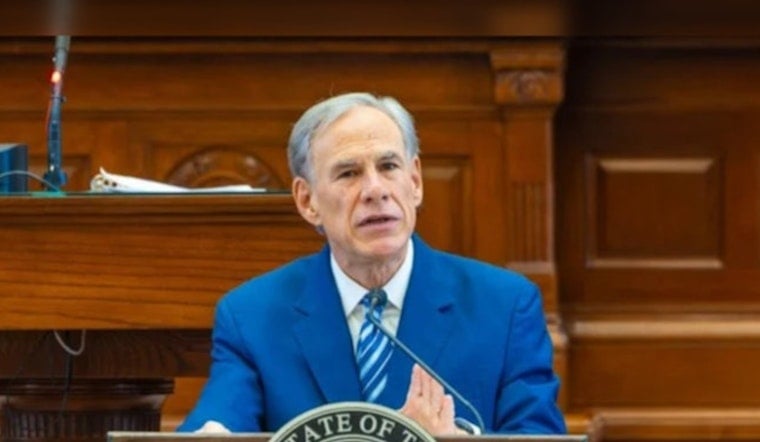
Texas Governor Greg Abbott has directed state financial officials to audit up to four independent school districts of varying sizes and locations, demanding a final report by December 31, 2026, ahead of next year's legislative session. The formal letter, sent Wednesday, calls for a review of whether taxpayer dollars are reaching classrooms and teachers or instead funding what the governor describes as central-office growth, administrative bloat, consultants, and other noninstructional costs.
The directive, posted Wednesday by the Governor Abbott Press Office, frames the audits as part of a broader effort to hold districts accountable as the state touts what it calls historic investment in public education. According to the Office of the Texas Governor, the reviews are meant to determine whether K-12 funds are being spent in compliance with state law rather than diverted to noninstructional overhead.
Newly appointed Texas Comptroller Don Huffines announced Wednesday that his office will carry out the reviews under a program dubbed the Huffines Performance Review. The Texas Comptroller of Public Accounts says districts currently run by state-appointed boards, including Houston ISD and Fort Worth ISD, will not be eligible for selection, and the office plans to name the specific districts under review in the coming weeks.
A Comptroller Freshly Sworn In
Huffines took office in August 2026 after Governor Abbott appointed him to fill the vacancy left by former Comptroller Kelly Hancock's resignation, according to reporting from The Texan. Huffines is reportedly declining a state salary while overseeing the office's tax programs and now the new district-level performance reviews.
The audit push follows the May 2025 passage of House Bill 2, an $8.5 billion public education package that Abbott signed into law. Per the Texas Tribune, the bill earmarked $4.2 billion for teacher and staff pay raises, another $2 billion for special education reforms, and raised the state's basic per-student allotment from $6,160 to $6,215 — the first increase to that baseline funding formula since 2019.
Local Districts Still Facing Deficits
Despite that funding package, school districts across the state — including Cypress-Fairbanks ISD, San Antonio ISD, and Comal ISD — have adopted multi-million-dollar budget deficits for the 2025–2026 and 2026–2027 school years, as Hoodline previously reported. Local administrators have attributed the shortfalls to inflation and per-student funding adjustments that failed to keep pace with rising operational and personnel costs. Hoodline also detailed how Comal ISD approved a $355 million budget while confronting a $28 million gap earlier this summer.
The timing places the new audits alongside the state's rollout of its $1 billion Texas Education Freedom Accounts voucher program, launched under Senate Bill 2 for the current academic year. Huffines has reported 85,344 confirmed participating students and a waitlist exceeding 120,000 applicants, and public school advocates have warned that voucher adoption drains attendance-based revenue from traditional districts, per the same Hoodline account.
The Robin Hood Factor
Texas school finance is also shaped by the state's so-called Robin Hood recapture system, under which property-wealthy districts return excess local tax revenue to the state. According to the Texas Tribune, 225 such districts sent nearly $3 billion back to the state during the 2024–2025 fiscal year, up from $1.4 billion a decade earlier, citing Texas Education Agency data. That mechanism forces high-property-value districts to funnel collections toward lower-wealth areas, adding another layer to the debate over where district money actually goes.
Conservative critiques of administrative growth have also entered the conversation. Research cited during San Antonio ISD budget debates and reported by the Texas Monitor estimated that if non-teaching staff growth had stayed aligned with student population growth over recent decades, Texas schools could have saved $2.2 billion annually — a figure often invoked by policy analysts pushing for school board cost-cutting.
Part of a Broader Budget Push
The audit directive also fits into a wider pattern from Austin. In July, Abbott, Lt. Gov. Dan Patrick, and House Speaker Dustin Burrows jointly ordered a 3 percent budget trim across state agencies and public universities, citing goals of protecting K-12 funding and financing future property tax relief. Earlier this month, Abbott also rolled out a new Student Success Academies initiative focused on reading and math interventions, building on the July launch of the 20-member, teacher-led Texas Classroom Commission, a sequence Hoodline has tracked in its coverage of the governor's education policy stops ahead of the 2027 legislative session.
The comptroller's audit findings, due by December 31, 2026, are expected to feed directly into fiscal debates and legislative proposals when the 90th Texas Legislature convenes in 2027. Whether the reviews confirm the governor's suspicions of administrative bloat or instead reinforce local districts' complaints about inadequate per-student funding remains an open question that lawmakers will be weighing heavily in the months ahead.



