

























































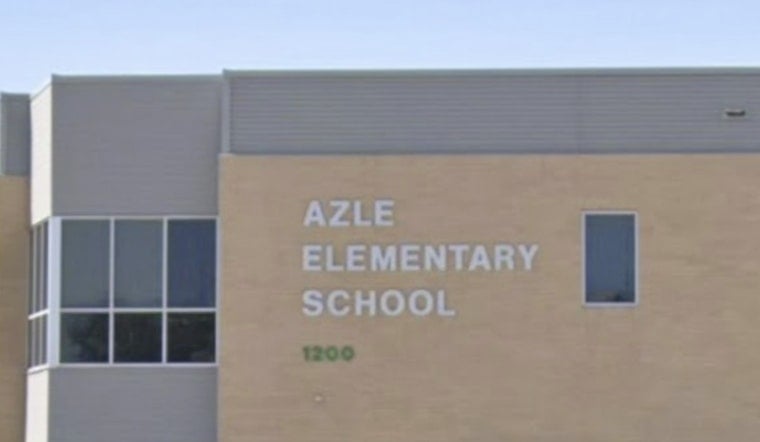
Texas public school districts are now taking money from the very voucher program designed to help families leave them, and for districts like Azle ISD and Cypress-Fairbanks ISD, it is proving to be a financial lifeline. Azle ISD has enrolled nearly 250 students accepting Texas Education Freedom Accounts (TEFA) funds, while Cypress-Fairbanks ISD reported more than 1,500 students doing the same, according to figures shared with Spectrum News. Neither number is final, but both reflect a strategy state officials never quite anticipated: public districts positioning themselves as voucher vendors rather than voucher casualties.
The Texas Education Freedom Accounts program, created under Senate Bill 2, was designed to give families money to pay for private school tuition or homeschooling expenses, not to fund traditional public school classrooms, according to Spectrum News. Yet the statute allows public districts to opt in for specific, non-traditional offerings, and more than 2,700 schools statewide have signed up to accept the funds, per the state's own reporting cited by Spectrum News. Both Katy ISD and Cypress-Fairbanks ISD, located near Houston, are eligible to enroll in the program, while Azle ISD, outside Fort Worth, also qualifies.
Azle ISD Bets On Pre-K To Build Future Hornets
Azle ISD Superintendent Todd Smith said accepting voucher funds represents an opportunity for the district, framing TEFA participation as a way to introduce new families to Azle ISD, according to the same Spectrum News report. Smith said he hopes the program could turn early enrollees into what he called lifelong Azle ISD Hornets, and he hopes participation will keep growing. The district currently has about 15 tuition-paying Pre-K students who do not qualify for other grants or scholarships and are not using voucher money, separate from the students receiving TEFA funds.
Azle ISD accepts TEFA funds specifically for its tuition-based Pre-K program, a offering that fills a gap left by state rules restricting free public Pre-K to low-income or military families. For the 2026–2027 school year, the district set annual Pre-K tuition at $6,000 per student with a $600 deposit, and it now accepts TEFA voucher funds to cover those costs across all elementary campuses except Eagle Heights, according to Azle ISD. The state pays districts a little over $6,000 per student who attends class, per Spectrum News, meaning voucher-funded Pre-K seats function much like standard per-student funding once a family opts in.
Why Azle Needed The Money
The financial backdrop explains the urgency. Azle ISD reported a potential budget deficit of $1.3 million for the coming year in May, as total district enrollment dropped from 7,205 students in March 2025 to 7,051 the following April, according to The Sting. That decline, paired with fixed overhead costs that do not shrink alongside enrollment, prompted district leadership to introduce hybrid online high school courses as another way to retain local families, the outlet reported.
Cy-Fair ISD Leans On Online Classes And Pre-K Revenue
Cypress-Fairbanks ISD, the third-largest school district in Texas, is taking a similar approach on a larger scale. The district accepts TEFA funds for both online classes and Pre-K students, and Superintendent Doug Killian said the program offers a way to bring in revenue while still serving the community, per Spectrum News. Killian added that ESA funding could help the district offer Pre-K to financially challenged families who do not meet other eligibility thresholds.
Cy-Fair ISD had no exact enrollment count available while registration was still underway at the time of reporting, Spectrum News noted, even as the district's more than 1,500 TEFA-linked students already outpaced most other participating public systems. That participation count, notably, includes students who lived within district boundaries and had previously attended private school or homeschool — meaning not every voucher-funded student represents a family newly drawn into the district's orbit.
A Statewide Squeeze On District Budgets
The pressure driving these moves extends well beyond Azle and Cy-Fair. Cypress-Fairbanks ISD trustees approved a $1.25 billion budget for the 2026–2027 school year carrying an $80.9 million deficit, with demographers projecting the district could lose between 4,000 and 8,000 students over the next four years due to lower birth rates, charter school expansion, and TEFA vouchers, according to Community Impact. A statewide demographic analysis by the Texas Comptroller's office found Cy-Fair ISD led all public school districts in voucher participation among its own resident students, with 1,596 resident children accepting TEFA accounts for the coming academic year.
Districts are paid by the state for each student who attends class, which is why resident students leaving for private options through TEFA directly reduces attendance-based state revenue, even as accepting voucher funds for Pre-K and online programs offers a partial offset. Compounding the squeeze, the basic per-student allotment that funds public school operations rose by just $55 — from $6,160 to $6,215 — under House Bill 2 passed during the 2025 legislative session, an increase local school boards say failed to keep pace with inflation, as Hoodline previously reported.
Statewide Demand Far Outpaces The $1 Billion Cap
Zooming out, the numbers show just how much appetite exists for TEFA statewide. Texas Acting Comptroller Don Huffines reported earlier this month that 85,344 students statewide have confirmed participation in the program for the 2026–2027 school year, while more than 120,000 eligible applicants remain on a waiting list because the program's initial funding is capped at $1 billion. Pre-K alone accounts for more than 9,400 voucher program participants for the upcoming school year, per Spectrum News, even though Pre-K applicants face stricter state eligibility requirements than traditional K-12 applicants — a factor that helped push the ineligibility rate up among the 274,036 total applications the state received during the spring application window, with 25,400 declared ineligible, according to Accessible Education.
The state's inaugural TEFA demographic report also found that roughly 80% of participating students live in households earning at or below 200% of the federal poverty level, or $66,000 annually for a family of four, and nearly 24% have a documented disability, Community Impact reported. Lawmakers built a priority lottery system into the program giving first preference to lower-income families and children with individualized education plans. Approved funds reach families in three scheduled disbursements — 25% on July 1, 50% on October 1, and the remaining 25% on April 1, 2027 — through a digital parent portal managed by state vendor Odyssey.
Not Every School Is Opting In
Public district participation stands in contrast to some private schools' wariness of the program. Cypress Christian School in northwest Houston chose to opt out of TEFA in 2026, citing concerns that accepting state funds would trigger public records audits and interfere with religious governance, Hoodline reported in a piece exploring the private school's decision to reject the money over what it called biblical-rule concerns. Senate Bill 2 requires participating private providers to submit to state audit standards and testing oversight, a condition public districts like Azle and Cy-Fair are already accustomed to navigating as government entities.
The split illustrates two very different calculations happening across Texas education this year. Public districts facing enrollment declines and thin per-student funding increases see TEFA as a tool to claw back revenue for services families already want, from Pre-K to online coursework. Some private institutions, meanwhile, are deciding the trade-off in state dollars is not worth the added oversight — a tension likely to keep shaping how the voucher marketplace evolves as more of the 120,000 waitlisted applicants eventually seek a spot.



