

























































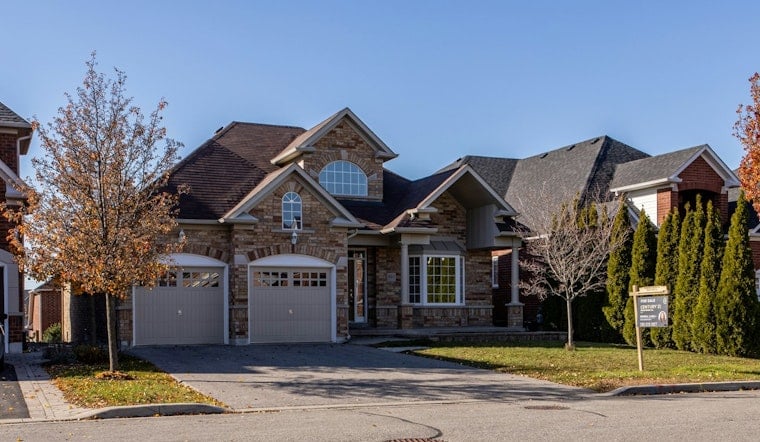
The housing market in the Austin metro area is showing significant changes, with housing inventory reaching a 13-year high, as per a recent report from Unlock MLS. The Central Texas Housing Report indicates that the Austin-Round Rock-Georgetown metro now has 4.9 months of available housing inventory, a noteworthy increase from 3.4 months in May 2023 KVUE reported.
Not just inventory has been affected, closed home sales in May also sharply fell by 12.8% year-over-year. Active listings, in turn, have seen a substantial rise of 37.7%, giving potential home buyers a wider range of options to be more selective when purchasing. However, according to a statement obtained by CBS Austin, Clare Losey, a housing economist for Unlock MLS and the Austin Board of REALTORS, warns, "Although it may appear to be a buyer's market from the outside, it's important to understand the context behind these statistics, including higher interest rates resulting in a reduction in purchasing power."
The median home price in the broader Austin metro slightly dipped to $459,450, representing a 0.4% drop compared to last year. Meanwhile, in the urban heart of Austin, the median price for residential homes climbed substantially by 11.6% to $608,438, as found by KVUE's report. This increase appears alongside an 85.3% surge in active listings within the city limits, underscoring a dynamic real estate situation that remains complex for both buyers and sellers alike.
Across different counties in the metro area, the numbers fluctuate. Travis County has experienced an 18.8% decrease in residential homes sold, whereas cities like Hays County are witnessing a 2.4% increase in the same metric. Williamson and Bastrop Counties are also facing varied trends, with Williamson seeing an 11.3% decrease and Bastrop a 9.8% decrease in homes sold, according to the figures shared by KVUE. The distinct market movements across the region emphasize not just a higher inventory available but also an intricate property landscape that is quickly shifting to adapt to global, national, and local economic pressures.





