

























































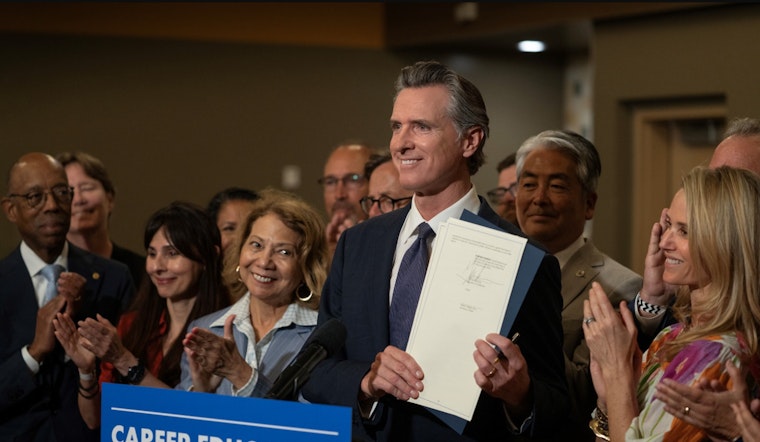
In a progressive stride towards amplifying higher education inclusivity, California has launched a proposal aiming to expand federal financial aid for a broader swath of its community college students. Governor Gavin Newsom and California Community Colleges Chancellor Sonya Christian spearheaded this initiative, according to an announcement on the governor's official website. They submitted their plan to the U.S. Department of Education, setting the stage to potentially enable students lacking a high school diploma—or its equivalent—to tap into Title IV financial aid resources.
As stated on the governor's website, Newsom asserted, "Regardless of background or credentials, every Californian deserves the opportunity to pursue their dream career and a higher education degree," articulating the ethos behind the proposal, which seeks to dissolve the barriers that impede certain Californians from chasing their academic and occupational goals. If the Ability to Benefit (ATB) proposal gets the green light, an estimated four million Californians without a high school diploma could gain financial aid accessibility, therefore augmenting opportunity and educational equity across the state, and students diving into the ATB process would be further supported by a robust net of academic resources.
Chancellor Christian, reflecting on the transformative potential of the measure, expressed that "This initiative has the ability to change lives," recognizing that it carves out avenues for adult learners to step into academic ventures, unconstrained by past educational setbacks or life circumstances, as stated by the governor's official website. She emphasized that by cutting through financial constraints, the proposed changes would bring students strides closer to achievements—bolstered by the initiative's support mechanisms, ranging from basic needs aid to educational counseling.
Looking at the wider view, the proposed adjustments are integral components of the Governor's overarching Master Plan for Higher Education, aiming to sync and streamline California's education and workforce systems from kindergarten through university levels, ensuring a solid collective commitment to lifting access to education and job opportunities for California's residents. Community colleges across California are hereby taking up the Guided Pathways framework, diligently tailoring academic programs and support services that chart out clearer pathways for students from their starting points until they clutch their credentials or degrees. Using dual enrollment, adults in the quest for high school diplomas or equivalents are concurrently advancing towards postsecondary degrees or certificates, which stands as a key maneuver within California's adult education spheres.





