

























































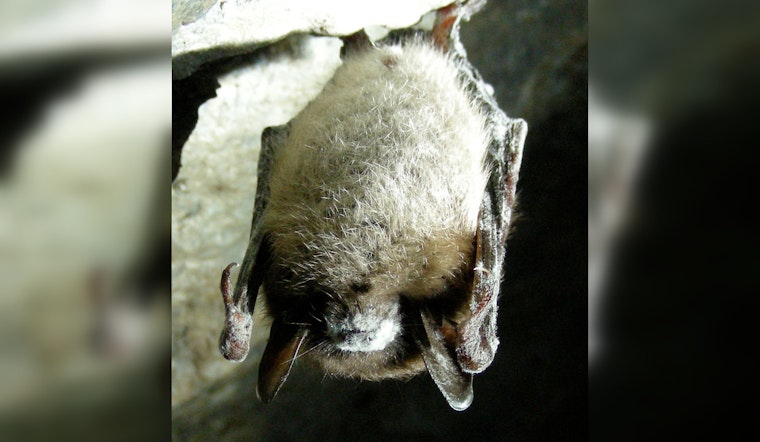
In the latest scoop of environmental concerns, Texas biologists have rung the alarm bells on more cases of White-Nose Syndrome (WNS) impacting the local bat populations, citing evidence of this deadly disease in tri-colored bats – the first-ever noted occurrence in the state, and a significant shift in the boundary of this fungal plight to its southernmost point. According to a Texas Parks and Wildlife Department (TPWD) report, not only tri-colored bats but three previously unaffected species in Texas – the fringed myotis, long-legged myotis, and canyon bats – have been confirmed carriers of the P. destructans fungus responsible for WNS.
This discovery also marks a disconcerting first for canyon bats, unveiling their role in the narrative as new hosts for the fungus, an aspect previously undocumented anywhere else in the nation, the observation only gets grimmer as the spread of P. destructans not only suggests but actively redraws the map of the contagion's reach. Jonah Evans, TPWD's Non-game and Rare Species Program Leader expressed concerns that earlier conjectures about warmer climates being less susceptible to WNS are now being turned on their heads with these recent findings, "Unfortunately, with the development of WNS in cave myotis in Central Texas in 2020, and these most recent reports in tri-colored bats, hopes that WNS may not develop or significantly impact some WNS-affected species in southern regions, have been upended," thereby putting a damper on initial optimism, Texas Parks and Wildlife Department (TPWD) reported.
The potential consequences of P. destructans' incursion into canyon bat populations are significant, given these animals' extensive range throughout the western United States, a point underscored by TPWD state bat specialist Samantha Leivers, Ph.D. "Due to our limited knowledge of canyon bat ecology and behavior in Texas, it is unknown whether canyon bats will act only as a carrier of P. destructans, or whether they may be affected by WNS," Leivers mentioned in a statement that hints at the evolving puzzle of this fungal disease's dynamics within various bat species.
Ultraviolet light scans are part of the on-field detective toolkit for biologists tracking the presence of P. destructans, the fungus that conspicuously glows orange on the wings and bodies of bats, this method flagged the need for further tests confirming not just the presence, but active disease in some cases. Such procedures in Kendall County resulted in two tri-colored bats being confirmed for WNS; similarly, Brewster and Jeff Davis counties reported suspicious signs in fringed myotis and long-legged myotis respectively, with tests turning up positive – all these pointing to an increasing spread within the Texan ecosystem.
Amidst this bleak backdrop, TPWD is not sitting ducks: they've been proactive in collaborating with various conservation organizations and academic institutions to fund research into understanding and combating the spread of the fungus. Notable partners include Bat Conservation International, the Texas A&M Natural Resources Institute, and Texas State University – entities striving to peep into this cryptic fungal invasion that is raising serious conservation flags and challenging previous assumptions about the resilience of bat populations in warmer southern climates.



.jpg)