

























































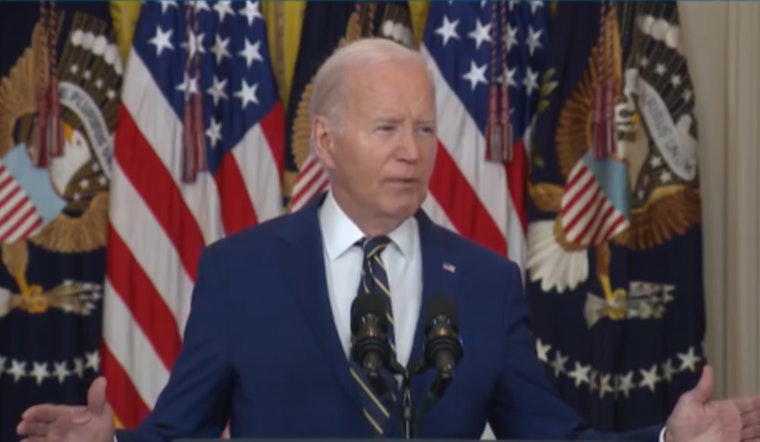
President Joe Biden's new executive action, announced on Tuesday, is setting a cap on the number of migrants allowed to claim asylum at the U.S. southern border. This decision comes as the Border Patrol reported encounters with more than 2,500 migrants per day over a week-long stretch. As per the new directive, migrants will be turned away once this number is surpassed, with the U.S. only to begin accept new asylum claims when the daily average falls below 1,500 encounters, as Local 10 News reports.
This measure is seen by some as a political maneuver, with Miami immigration attorney Antonio Revilla describing it as "a political football," pointing out that while "everybody is entitled in this country to apply for asylum," this new policy will make it "a lot more difficult to apply." Revilla expressed his concerns about the potential dangers faced by children who might journey to the U.S. border unaccompanied, due to parents' fears of being turned away. “Imagine a child traveling from Honduras all the way to the U.S. border by themselves," Revilla told Local 10 News. "Imagine the dangers that they are going to be placed into."
The impact of Biden's order is expected to resonate beyond border states, particularly in places with a history of welcoming migrants, such as South Florida. Advocacy groups, including the Florida Immigrant Coalition, have spoken out against the temporary limit, as reported by NBC Miami. Thomas Kennedy of the Coalition called the presidential action "a complete betrayal of what the president purported to represent in terms of immigration policy when campaigning." He also raised the issue that this change might contribute to the ongoing economic pressures facing many residents in the state, suggesting it may exacerbate the cost-of-living crisis.
Willy Allen, a South Florida immigration attorney, echoed these concerns about the potential effects of this policy on those with legitimate asylum claims. "My concern is what happens at the border," Allen said, as reported by NBC Miami. While he doesn't anticipate any drastic changes for migrants arriving through existing humanitarian parole programs, the broader implications of the policy are yet to be fully understood. The administration, through a statement by Luis Miranda of Homeland Security to NBC Miami, has defended the executive order as a necessary measure in the face of Congressional inaction to correctly streamline asylum processes.





