

























































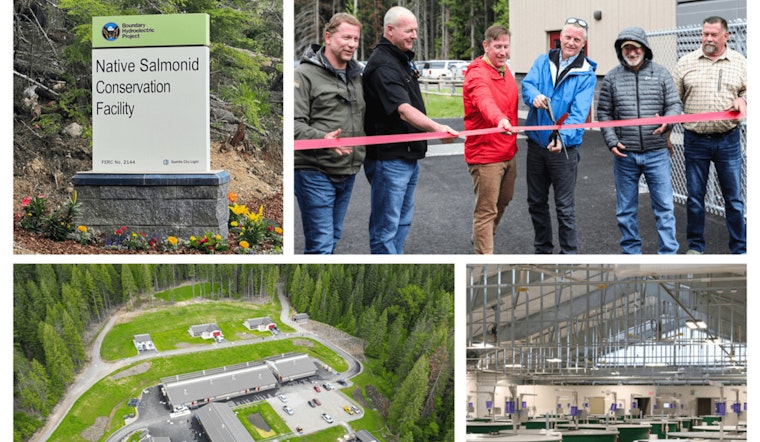
Seattle City Light has recently opened the doors to its latest contribution to fish conservation with the launch of the Native Salmonid Conservation Facility (NSCF) in Usk, as reported by Powerlines. The facility, costing nearly $27 million, is part of a broader initiative connected to the relicensing of Seattle City Light's Boundary Hydroelectric Project and aims to foster self-sustaining populations of native fish species in the region.
According to the Powerlines report, the NSCF stands as a testament to concerted efforts in fish conservation, holding separate containers for different fish populations to maintain their distinct genetic traits, though the cutting-edge conservation efforts are complemented by partnerships with various entities including the Kalispel Tribe of Indians and the Washington Department of Fish and Wildlife; this represents how collaborative approaches are now integral to environmental stewardship. At the heart of the NSCF's mission is a shared vision between agencies, tribes, public utility districts, and stakeholders, and such collaborative energy was echoed by multiple speakers at the ribbon-cutting ceremony held last month.
Mitch Combs, who is the Native Salmonid Conservation Facility Supervisor, opened the event and was followed by a message from Chris Donley, the Region 1 Fish Program Manager for the Washington Department of Fish and Wildlife, who stressed the importance of such a facility stating, "In a time and place where we see native fish disappearing at rapid rates because of climate change and habitat destruction, for us to have a place where we have a stop gap, and we’re making progress in the right direction for native fish is really something that’s unforgettable."
Further illustrating the facility's significance, Mike Haynes, Chief Operating Officer at Seattle City Light, highlighted their ongoing commitment to the cause, explaining how the facility is not just about releasing fish but ensuring their survival and reconnection to their environments, previous efforts cited include the removal of the Mill Pond Dam and the management of invasive species in Sullivan Creek which reconnected 46 miles of stream habitat to the Pend Oreille River, it was an event celebrating much more than the facility's opening—it celebrated a symbiotic hope anchored in partnerships and a vision for sustainability.
The optimism shared at the NSCF's inauguration extends to the facility's future potential and impact, with leaders from multiple environs coming to a consensus on the power of unity in pursuing environmental goals. The NSCF's opening isn't just a milestone for Seattle City Light and its partners but a symbol of what collaborative environmental stewardship can accomplish in the face of pressing ecological challenges.





