

























































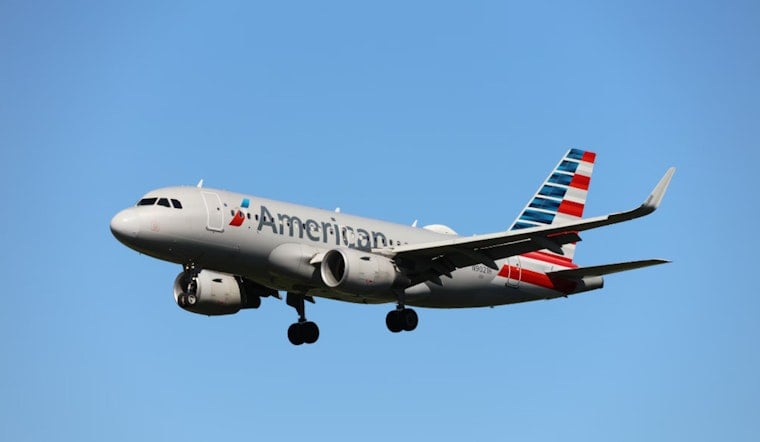
In a move consciously made toward sustainable aviation, American Airlines has put down roots for a more eco-friendly sky, aligning itself with ZeroAvia, a firm at the cusp of zero-emission technology. The Fort Worth-based carrier has committed to purchase 100 hydrogen-electric engines from the California-based aircraft developer, as reported by the Houston Chronicle. This step forward aims to power regional jets to notably reduce inflight emissions down to water vapor.
The partnership was first seeded in 2022, and American Airlines is looking to manifest a net-zero greenhouse gas emissions policy by 2050 — a stark challenge given the industry's heavy carbon footprint. "In signing this purchase agreement and furthering its investment, American is supporting our mission of innovation for clean aircraft propulsion and it is a good signal that ZeroAvia is delivering on our technology roadmap," said Val Miftakhov, CEO of ZeroAvia, according to the Houston Chronicle. Circumstances allow the use of such engines for regional flights, though the wait might extend as the technology is to be ready for practical use only by the end of 2025 for 20-seat planes, with presumptions to thereafter stretch their scope.
Despite the enthusiasm, there seems to be a consensus that commercially employing these systems might take longer than projected timelines. "They may be able to demonstrate by 2025, but whether it will be commercially available in 2025 is very, very doubtful," Kaushik Rajashekara, an engineering professor at the University of Houston, weighed in during an interview with Chron.com. Rajashekara emphasized that the path to commercial availability is fraught with required testing and validations.
American Airlines CEO Robert Isom heralds this move as a conscientious push to revolutionize the industry's carbon footprint. "Advancing the transition of commercial aviation to a low-carbon future requires investments in promising technologies, including alternate forms of propulsion," Isom told the Chron.com. Indeed, once to obtain certification, ZeroAvia anticipates its hydrogen-electric systems to match, if not outperform, the safety benchmarks of traditional jet fuel.
As part of the broader conversation on aviation emissions, other industry players, such as Alaska Airlines and Airbus, are also contributing their part towards greener skies. Airbus, for instance, announced its commitment in 2022 to advancing a hydrogen-powered fuel cell engine, as Chron.com mentioned. With a portfolio of strategies to decarbonize flight, the race to reach a global standard of emissions by 2050 continues to be a complex one, underscored by technological prowess and mindful investment.





