

























































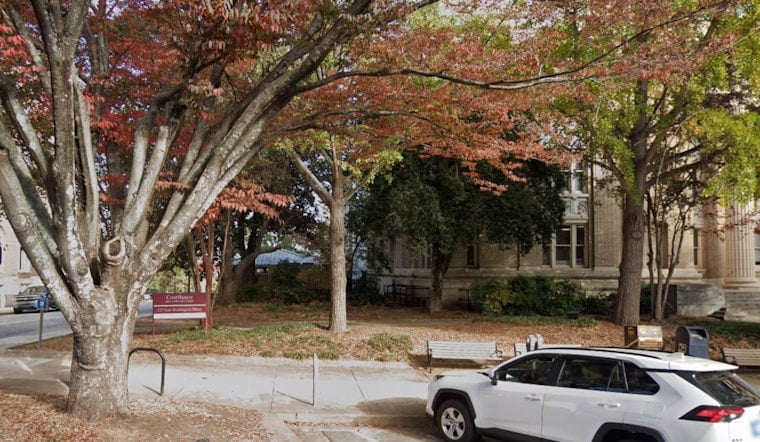
The Athens-Clarke County Courthouse at 325 East Washington Street is set to remain closed until July 31. While the expectation was to reopen on July 29, employees working on Sunday evening reported the possible presence of bed bugs, leading to the extension of the closure for further treatment. According to the courthouse's emergency order, this closure will affect jury trials, hearings, and an assortment of judicial activities, as detailed in a statement obtained by SFist.
The confirmation of bed bugs and the subsequent response started with treatments that began on July 22. Although the pests were only discovered in certain sections across three levels, the entire facility underwent treatment. In spite of rigorous efforts, the origin of the bed bugs within the courthouse—a hub for daily visitors—remains unknown. The temporary shuttering is out of an abundance of caution to re-treat two areas and to conduct a comprehensive evaluation of the remaining building. As reported by www.accgov.com, regular courthouse operations are anticipated to resume on Wednesday morning.
Various public offices located in the courthouse, including the Clerk of Superior and State Court, the Sheriff’s Office, and the Tax Commissioner’s Office, are amongst those affected by the closure. However, the courthouse parking deck remains open. As services adjust to the emergency order, those in need of information or support are encouraged to visit individual office websites or contact them directly through information posted on the courthouse's entrance or listed on their website.
While bed bugs are often associated with unclean living conditions, the Centers for Disease Control and Prevention (CDC) clarifies that their presence is not determined by cleanliness and they do not typically pose a serious medical threat. These small, flightless insects are typically spread through human travel and can be found in varied environments, including upscale establishments. Individuals seeking more information about bed bugs can access resources provided by the CDC, the Environmental Protection Agency (EPA), and the Georgia Department of Public Health, with links available through the courthouse's public notices.





-4.webp?w=160&h=400&fit=crop&crop=edges)

