

























































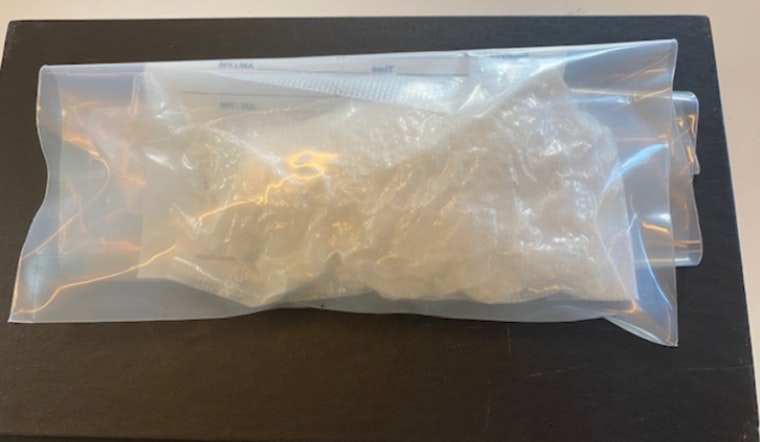
An Easthampton man was taken into custody on charges of narcotics distribution, marking a significant step in the ongoing battle against drug trafficking in Massachusetts. The arrest, which occurred on July 12, was the result of a collaboration among various law enforcement agencies, including the Massachusetts State Police Commonwealth Interstate Narcotics Reduction Enforcement Team (C.I.N.R.E.T. Western Region), the Easthampton Police Department, and federal partners such as the DEA and the United States Postal Inspectors.
According to a statement from C.I.N.R.E.T., the accused, Cavoris Harris, 41, faces charges of trafficking methamphetamine between 100 and 200 grams, possession with the intent to distribute Class A (Gamma Hydroxy Butyric Acid, also known as GHB) and Class B substances (Ecstasy). The investigation, which spanned several months, concluded with a search warrant at Harris's residence where they found 121 grams of suspected "crystal rock" methamphetamine, MDMA pills, and a quantity of GHB. Methamphetamine is known to be a highly addictive stimulant with potentially lethal overdose effects, including stroke, and heart attack.
In the mission to dismantle drug trafficking operations, multi-agency coordination has proved to be critical. "I cannot stress enough the importance of eradicating the presence of methamphetamine in our communities," stated Colonel Mawn in a report by MSP News. Mawn emphasized the drug's devastating impact on public safety and the concerted efforts by the C.I.N.R.E.T. Western Team to address this threat through focused disruption of trafficking networks.
This latest arrest underscores the ongoing issue of methamphetamine circulation in the Western Region of Massachusetts. The collaborative effort is supported by various agencies, an approach aiming not only to apprehend those involved in drug trafficking but also to support communities grappling with addiction. Recognizing the complexities of combating such an insidious problem, the task force remains actively engaged in establishing strong partnerships to foster safer neighborhoods. Their holistic strategy includes working with public health and social service partners to provide necessary aid to individuals and families affected by the repercussions of drug abuse.





