

























































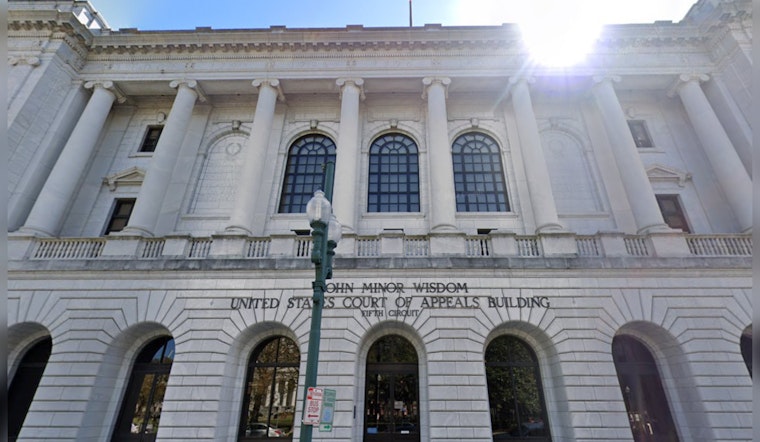
In a significant legal twist that underscores the intensifying conflict over immigration enforcement, the Fifth Circuit Court of Appeals ruled yesterday that Texas can temporarily maintain its contentious floating barrier in the Rio Grande, a measure originally deployed to curb illegal crossings. The court's decision, as reported by The Texas Tribune, strikes down a previous lower court's order and effectively reverses an earlier judgment by a subset of the same appeals court, which had initially sided with the federal government.
This legal skirmish is the latest chapter in a broader saga involving the state of Texas' staunch efforts, under Gov. Greg Abbott's Operation Lone Star, to assert authority over border security and immigration control, measures that have led to legal wrangling with the federal government, who has sued Texas arguing that the barrier poses a slew of legal, environmental, and diplomatic issues; the barrier's contentious nature is underscored by its $850,000 price tag and eclectic design, comprising bouys connected by saw blades and a submerged net meant to deter migrants, becoming a focal point for protests from activists and international dispute with the Mexican government.
According to the lawsuit, the Justice Department asserts that the barrier constitutes a safety hazard, infringing upon international treaties with Mexico, deteriorating bilateral relations, and that it was installed without requisite authorization from the U.S. Army Corps of Engineers, the federal body responsible for regulating such activities in navigable waters and wetlands. Abbott, juxtaposing his role as the state's leader against the Biden administration's immigration policies, defends the barrier's deployment as necessary to shepherd migrants towards legal entry points and to obstruct unlawful crossings, including drug smuggling, as reported in The Texas Tribune.
The court's ruling has introduced an unexpected pause in the ongoing legal drama, with the appeals court concluded that the barrier is not situated in "navigable water," and therefore, Texas' placement of the barrier may not constitute a violation of federal law, this conclusion starkly contrasts an earlier ruling by a panel of the same court which had deemed the river stretch navigable and required the involvement of the Army Corps of Engineers for any such deployment; this seesaw in judicial positions reflects the complexities entangled within the web of federal and state jurisdiction, environmental considerations, and the sentiments of a nation grappling with the realities of immigration policy.





