

























































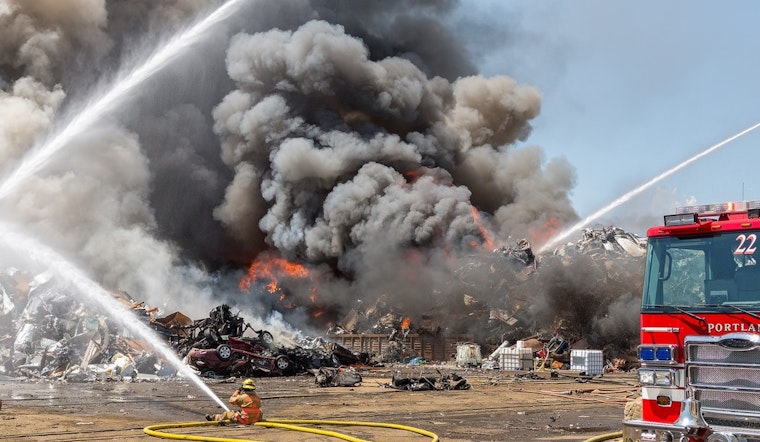
On Wednesday afternoon, just past the 1 PM mark, a significant blaze erupted at a metal recycling facility operated by Radius Recycling, which is affiliated with Schnitzer Steel. According to a statement by the Portland Fire & Rescue (PF&R), the conflagration was concentrated in a large heap of mixed metals destined for shredding, consisting of crumpled vehicles, defunct appliances, and other sizeable metallic refuse. Within hours, the intensity of the inferno necessitated an escalation to a 4th alarm, summoning additional firefighting resources from all around Portland to tackle the rampant flames.
PF&R units implemented a "surround and drown" strategy, connecting hoses to fire hydrants and ladder trucks, allowing 1,200 to 2,000 gallons per minute to be discharged from aerial ladders onto the fire. Yard hydrants not connected to the main grid provided sufficient pressure and quantity of water. Consequently, two fireboats joined the effort to enhance the water supply, drawing directly from the Willamette River to combat the fire. While dealing with the blazing pile, plant workers used massive articulating claws to transfer unburnt materials away from the heat. Firefighters aimed streams of water at these relocated loads, stifling the potential for further ignition, as reported by the Portland Fire & Rescue.
The laborious firefight demanded extensive equipment but less direct human engagement, leading to a 4th alarm call aimed at securing enough apparatus and tools for managing the water flow and diminishing the flames by nearly 5 PM. Strategic efforts were initiated by command officers to release some companies from the scene, provided their manpower wasn't crucial for ongoing operations, this allowed for a reorganization of teams across the city, maintaining adequate municipal coverage and assistance from mutual aid partners such as Tualatin Valley Fire & Rescue, particularly in the southwest region.
PF&R expressed its gratitude to various divisions, like, for their support throughout the incident—including the Emergency Vehicle Technicians and PF&R Logistics Section, who ensured the operational integrity of machinery and refueled apparatus and tended to the crews' sustenance; moreover, commendations were extended to Vancouver Fire for their initial help and the dispatch center for adeptly handling three separate communication channels used during the fire. Concerns about pollutant runoff were addressed by an on-site water collection and purification system that captured the firefighting water to prevent any contamination of the watershed. Residents in the affected areas downwind were advised by PF&R to keep windows shut to minimize smoke inhalation and its detrimental respiratory impacts.
As the situation progressed deep into the evening, fire watch teams were assembled to take over from the weary crews, ensuring the meticulous extinguishment of the fire well beyond midnight. Hundreds of firefighters who had been on the site for over six hours saw a phased release back to their stations, a transition overseen by the astute command staff committed to putting meticulous contingency plans in motion while allowing as many personnel as possible to return to their respective bases with diligent vigilance, fire watch units would persist until all flames were decisively quenched.





