

























































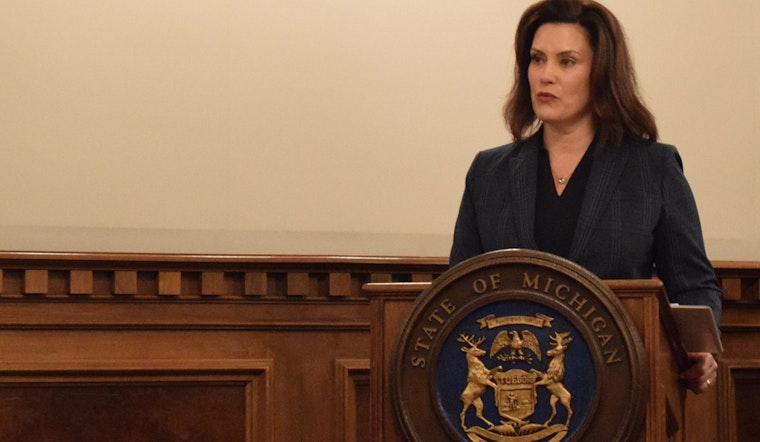
Michigan's commitment to maintaining the pristine integrity of the Great Lakes just notched a significant victory, as Governor Gretchen Whitmer inked a collaborative deal with the U.S. Army Corps of Engineers and Illinois, dedicating nearly $400 million to keep invasive carp species at bay, according to WWJ Newsradio. This financial infusion serves as the linchpin for the Brandon Road Interbasin Project, a multi-stage initiative geared toward erecting barriers at the metaphorical front door of the Great Lakes ecosystem.
Breaking down the numbers reveals the federal government's $274 million backing complemented by a stout $114 million from Michigan state coffers, and as Gov. Whitmer emphasized, the focal point of this ecological defense is sited near Joliet, Illinois, marking a strategic choke point crucial for halting the northward swim of the aquatic nuisances that threaten local economies and recreational safety, now, the funding is locked in, the first phase of this tripartite master plan can take a substantial leap from blueprint to reality, as reported by Michigan.gov.
As expressed by Michigan's head honcho herself, the Great Lakes are more than just a collection of vast, inland seas; they form the pounding economic pulse of the region, supporting industries fundamental to the state's prosperity. Fishing and boating, sectors supporting thousands of well-paying jobs, stand to benefit considerably from the project, which will not only shield the waters from invasive carp but also safeguard those "Pure Michigan" moments engraved in the collective memory of the state's residents, as per Michigan.gov.
The significance of this agreement cannot be understated, meshing the forces of various authorities, be it attorneys general, senators, or engineers, with the shared resolve to protect one of the nation's key natural resources, echoed sentiments from legal corridors to legislative chambers highlight the collective relief and anticipation for a future where the Great Lakes are insular to invasive species, the drive to prevent these fishes from establishing a foothold and unsettling the ecological and economic ballet of the region is a narrative as much about safeguarding a way of life as it is about conservation, and with the project's gears now set to turn, the collective gaze of Michigan and its allies fixates on a horizon where current and future generations can flourish unthreatened by piscatorial invaders.
Notably, U.S. Senator Debbie Stabenow hailed the project as a "big win" for the Great Lakes, reflecting years of orchestrated effort and highlighting its role in protecting a quintessential natural treasure. Similarly, U.S. Congresswoman Debbie Dingell, who has been instrumental in mobilizing resources for the venture, lauded the collaborative spirit that brought the project to this pivotal juncture, as mentioned by Michigan.gov.





