

























































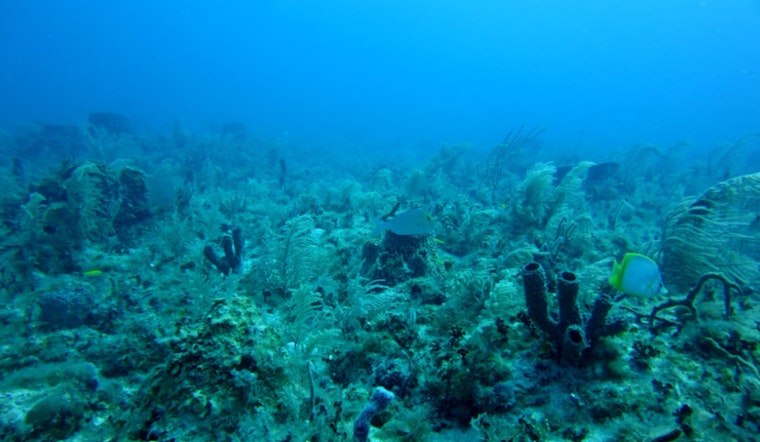
A substantial grant of almost $10 million has been granted to protect Maui's crucial reefs, according to an announcement by the Department of Land and Natural Resources (DLNR). The National Oceanic and Atmospheric Administration's (NOAA) Office of Habitat Conservation, deploying funds from the Bipartisan Infrastructure Law and Inflation Reduction Act, is backing the project which is concentrated on the island's West Maui reefs, spanning from Pāpālua to Olowalu. This area, globally recognized for its ecological significance, plays a central role in buffering the island's shoreline against wave energy and reducing the risk of coastal flooding.
DLNR Chair Dawn Chang commented on the grant's potential, "This transformational grant is a real game changer." She emphasized the project's broader implications, stating that while the focus is on the Olowalu reef, additional regions across the state will inevitably benefit from the gleaned best practices and lessons. In a statement released by DLNR, Chang expressed her gratitude toward NOAA and members of the Hawai‘i congressional delegation for their commitment to safeguarding these pivotal marine ecosystems.
The Division of Forestry and Wildlife (DOFAW) is set to spearhead the three-year initiative, in partnership with the Division of Aquatic Resources (DAR) and a consortium of conservation groups. Scott Fretz, DOFAW Maui Branch Manager, revealed in a statement on DLNR the area's historical environmental challenges, noting, "However, one of the real challenges resource managers have faced for many years in the project area, is that lower elevation lands have a number of issues that lead to erosion and sedimentation that impacts the coral reef ecosystem."
The grant aims to achieve five major objectives: controlling invasive animals, reducing wildfire occurrences, soil stabilization through reforestation, wetland and riparian habitat restoration, and the prevention of sediment runoff into the ocean. Additionally, the project seeks to engage local communities through the incorporation of traditional and cultural native Hawaiian knowledge into the restoration efforts. DOFAW Administrator Dave Smith explained on DLNR, "Fire is a major cause of sediment ending up on the reef. We are looking at putting in two, 40,000-gallon dip tanks that helicopters can draw from during active fires." Specific measures will include the construction and maintenance of multiple variations of fencing, fire breaks, and a sediment detention basin, with the scope of work encompassing nearly 250 acres of restoration sites.
Confidence in the success of the project is high, with Fretz asserting on DLNR, "Absolutely, 100 percent. We’ve got great marine and community partners." The grant assurance signals hope for a positive environmental impact that the model could extend to other areas facing similar challenges. The NOAA's Transformational Habitat Restoration and Coastal Resilience Grants total $220 million and will support 32 new programs nationwide, showcasing a nationwide effort to bolster coastal ecosystems against the threats of climate change and human impact.



