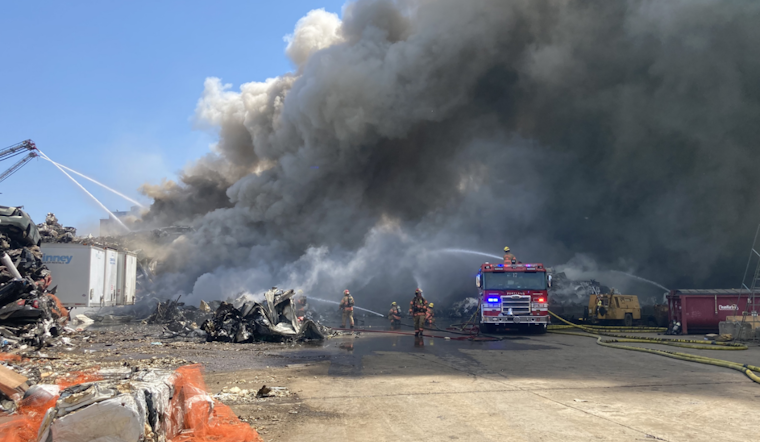
A fire that erupted at Radius Recycling in North Portland spurred Portland Fire & Rescue into action on Wednesday afternoon. The blaze, climbing to a four-alarm status, saw a massive plume of smoke ascending into the sky, visible across Vancouver, Wash., and sparking a community-wide alert. The fire at the metal recycling plant located at 12005 N. Burgard Road was first reported around 1 p.m., per The Seattle Times.
The debris set aflame included smashed cars, appliances, and other sizable metal objects awaiting shredding. Despite the alarming visuals, authorities were able to bring the situation under control within hours, and no injuries have been reported among the first responders or plant staff. An on-site water collection system managed the firefighting water, underscoring efforts to prevent contamination of the surrounding watershed, as described by The Columbian. Even after the fire was contained, crews maintained a vigil until midnight to address any possible hotspots.
While the immediate fire hazard was averted, the aftermath brought air quality concerns to the forefront for residents. Some reported a noticeable taste and smell of metal in the air, as shared by Karen Streiver, as per KOIN 6 News, "It was like an aluminum kind of taste or smell that comes into your house". Concerned citizens have been questioning what chemicals were involved in the incident and how they might affect their health.
Moving to ensure the well-being of their team members, Portland fire personnel are using extraction devices to clean their gear and are set to file exposure reports. Meanwhile, the Department of Environmental Quality (DEQ) monitors the scene but has yet to take a significant role in active testing for hazardous materials. DEQ public affairs specialist Michael Loch explained, "We have not formally been involved in the response because, at the time, we, do not anticipate any hazardous materials like asbestos, chemicals, oil or other hazardous materials to have been present in the fire." This statement from the DEQ, as cited by KOIN 6 News, goes on to clarify that the agency would have engaged more directly had there been preliminary evidence of such dangers.