

























































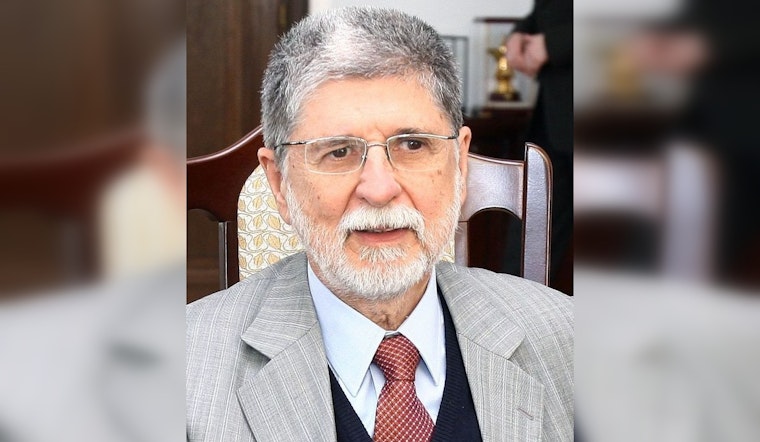
Top U.S. and Brazilian officials carved out time from their packed schedules for a sit-down that could have ripple effects on workers' lives on both ends of the hemisphere, as National Security Advisor Jake Sullivan met with Brazilian Presidential Advisor Celso Amorid at the White House, the Administration announced in a briefing yesterday. The dialogue circled around several hefty topics, including ever-important workers' rights and pressing global matters.
At the heart of their discussion was the Partnership for Workers' Rights, a joint venture started by the leaders of the two nations aimed at tackling longstanding challenges confronting the workforce — think forced labor, job discrimination, and the toll of soaring temperatures on daily labor. The details of the initiative, which first came to light alongside last year’s U.N. General Assembly, underscore a commitment to uplifting laborers not merely as cogs in the economic machine, but as human beings deserving of equity and protection. According to the White House, this commitment includes the Partnership for Workers' Rights, launched by President Biden and President Lula on the margins of last year’s United Nations General Assembly.
Beyond the scope of labor rights, Sullivan and Amorim cast their gaze wide, touching on a slate of crucial global and regional challenges that the two powerhouses are keen to navigate cooperatively. From the ongoing humanitarian and political instability rocking Haiti and Venezuela, to the unabated strife spurred by Russia's aggression in Ukraine, and tensions simmering in the Middle East, it's clear there's no shortage of geopolitical conundrums on the desks of these seasoned strategists.
What this cross-continental tête-à-tête portends for the everyday worker or for the delicate diplomatic dance on the world stage remains to be seen. However, what is certain is that both Washington and Brasília appear poised to march, perhaps now even more closely aligned, toward a future where rights and responsibilities are not mere words on parchment but are manifest in the lives of those they govern. Sullivan and Amorim also discussed several global and regional priorities, "including Haiti, Venezuela, Russia’s war against Ukraine, and the Middle East," as per the White House's readout.





.JPG)