

























































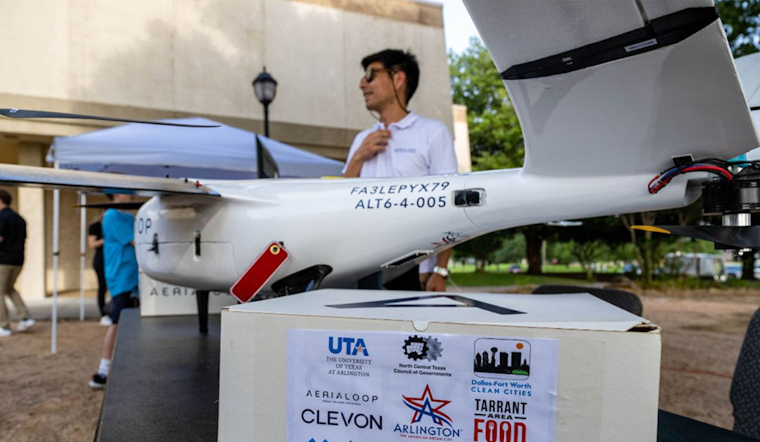
Following a substantial report from the Institute for Research on Innovation and Science (IRIS), it has been revealed that research at The University of Texas at Arlington (UT Arlington or UTA) had a significant positive impact on the U.S. economy over four years, with an infusion of $226.4 million through various contracts and subcontracts. The university's research endeavors not only propelled advancements across a breadth of fields but also spurred economic activity across the nation, according to the report. This was achieved by 797 vendor contracts and subcontracts facilitated between 2018 and 2022, of which a noteworthy number were clinched by minority- or woman-owned businesses.
According to the City of Arlington, Texas, Kate C. Miller, UTA's vice president for research and innovation, underscored the dual societal and economic benefits derived from the university's research; "Research coming from UT Arlington faculty and students not only helps solve some of society’s most vexing problems, but it is also an important economic driver for business development". This sentiment reflects a recognition of the broader implications of academic research, with universities increasingly being seen as catalysts for regional and national economic progress, the ripples of which extend not only to the educational sector but also to industries such as professional, scientific, and technical services and manufacturing.
Delving into specifics, the investment appears to have buoyed diverse segments of the industry markedly, with the educational services sector receiving a substantial $35.9 million for research-related efforts, while professional and scientific entities saw $29.1 million, and manufacturing companies benefited from $17.8 million. These figures represent how targeted the research spending was, and also, the cascade of fiscal benefits it has generated within the business community.
A considerable portion of the research funding streaming into UTA originated from federal sources, including heavy hitters like the National Science Foundation and National Institutes of Health among others with philanthropic entities and state and local government organizations also pitching in; illustrating the varied avenues through which research is supported and the interdependence of academic and governmental bodies in fostering innovation, according to the City of Arlington, Texas. Ultimately, the robust collaboration amongst such a diverse array of sectors underlines the flow of investment into academia as a cornerstone for economic stimulus through both direct expenditure and the resultant job creation channeled into numerous industries.
Data for this comprehensive report was assembled by cross-referencing UTA’s administrative data with Orbis's industry and workforce information, enabling IRIS to paint a detailed picture of the economic impact engendered by the university’s research projects. IRIS Executive Director Jason Owen-Smith, being quoted by the City of Arlington, Texas, providing deeper insights into the value of such integrative analysis: "Linking data from multiple sources this way reveals important insights into the results of university research spending not only for the national and regional economies, but for specific industries as well". IRIS's data-driven approach seeks to shed light on, and ultimately amplify, the dynamic roles higher education and research play in societal advancement.





