

























































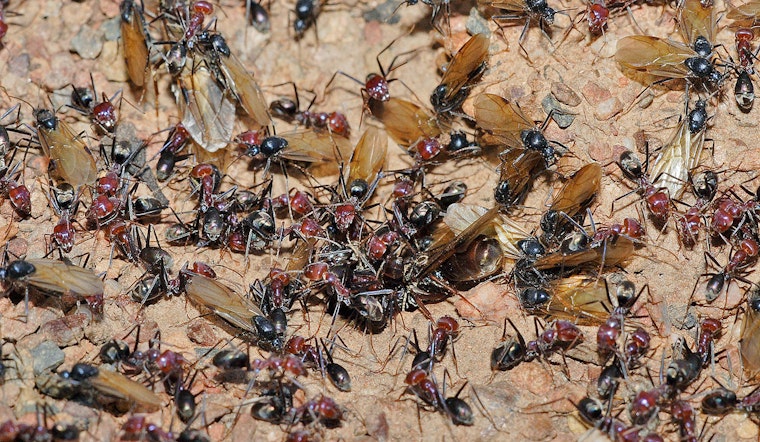
Boston residents found themselves in an unexpected entanglement with nature earlier this week, as swarms of winged ants descended upon the metro area, creating a spectacle—and a nuisance. According to reports from local news, what was observed was the result of a natural phenomenon known as the nuptial flight, an annual mating dance of the ants. Jeff Garnas, an associate professor at the University of New Hampshire, described the event as the time when ants "get up and away from the colony you were born in and meet some males from a different colony," as reported by Boston 25 News. Residents shared tales of their cars and homes being covered in the insects. Jayden Lassiter, a local from Roslindale, recounted to Boston 25 News that ants swarmed all over a friend's car, resulting in a mess that was both fascinating and disturbing.
State experts confirmed that such occurrences are typical this time of year, when heat and humidity peak, creating the right conditions for this natural reproductive cycle. The State Division of Fisheries and Wildlife noted that nuptial flights of ants normally last less than a day and that there are approximately 140 ant species in New England, according to a report by the Boston Globe. Meteorologist Dave Epstein, who contributes to the Globe, documented the ants in a video, explaining, "Heat and humidity often kick them off so it stands to reason why I’m seeing them today."
The social media response to the ant swarms was abundant, with residents and correspondents posting and sharing images of the deluge. Miles Howard, a correspondent for the Boston Globe, described the scene in a post as a "literal storm front of WINGED ANTS descending upon Boston." Meanwhile, reports from Reddit and Facebook groups reflected a city overwhelmed by these insects, with numerous accounts of individuals and vehicles caught in the swarm. People from neighborhoods including Jamaica Plain, Roslindale, and Hyde Park shared their encounters with the winged insects, ranging from near misses to full-fledged infestations.
Despite the stir caused by the ant swarms, experts stressed that the winged ants—termed alates—are short-lived and pose no harm to humans. According to F&W Pest Control, referenced by the Boston Globe, these flying ants emerge in warmer months and die off shortly after their mating rituals. The ephemeral nature of these insects may offer little solace to those who experienced the inundation firsthand, but it provides a scientific explanation for an event that can otherwise seem a freak occurrence. As the mayor's office has not yet commented on the event, residents are left to marvel at, and clean up after, the ants' whirlwind courtship, assuaging themselves with the knowledge that the phenomenon is but a fleeting chapter in the ecological cycle.



![fir0002 flagstaffotos [at] gmail.com Canon 20D + Sigma 150mm f/2.8](https://commons.wikimedia.org/wiki/File:Meat_eater_ant_nest_swarming.jpg)