

























































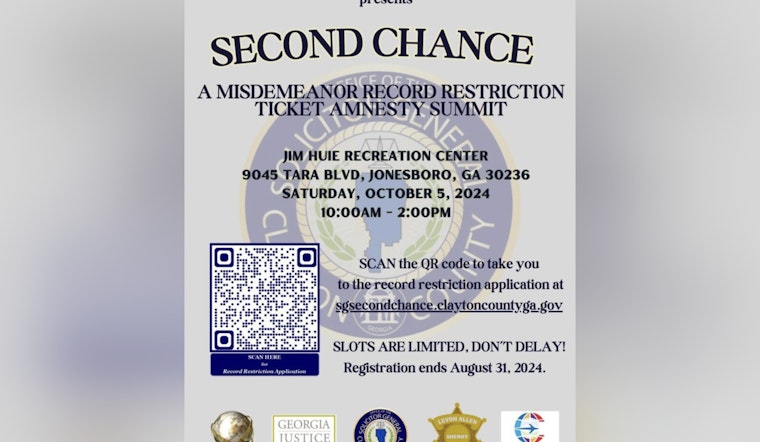
The Office of Solicitor General Charles Brooks is creating an opportunity for individuals saddled with the weight of minor past transgressions to find some form of reprieve. The event, dubbed "Second Chance: A Misdemeanor Record Restriction Ticket Amnesty Summit," will roll out its welcome mat on October 5, inviting those eligible to potentially clear their misdemeanor records. The summit is set to take place at the Jim Huie Recreation Center, located at 9045 Tara Blvd., Jonesboro, GA 30236, providing a four-hour window from 10 a.m. to 2 p.m., for attendees to engage with the process, according to the announcement by Clayton County.
In its announcement, the Clayton County government website provides critical details and a portal where interested parties can submit applications. Aspiring participants are directed to visit sgsecondchance.claytoncountyga.gov to kick-start their journey toward a cleaner slate. Running up against the burdensome legacy of a misdemeanor record—a reality that tens of millions of Americans must navigate—this effort presents an occasion to reconnect with society free from the stigmatizing brand often accompanying criminal records.
Details about which misdemeanors are eligible for restriction or the documentations required for the process have not been made public on the summit's announcement page. The eligibility criteria for record restriction, in specific, are anticipated to be outlined on the provided website, guiding participants on the necessary steps towards eligibility assessment and eventual record restriction. The summit event is part of a broader push to restore civil privileges and the potential for employment to those who have encountered the criminal justice system for relatively minor offenses.
While the conversation about criminal justice reform has been dominated by discussions concerning mass incarceration and felonious crimes, Solicitor General Charles Brooks's initiative shifts the focus. The summit highlights the less discussed but equally important arena of misdemeanor convictions, which, while less severe, can persist as obstacles obstructing one's access to employment, housing, and more. Each year, sheer millions of these cases, seen as the residue of a punitive legal system, add to America's collective misdemeanor problem, which this summit aims to mitigate, creating a space where past mistakes don't define one’s future.
For further information regarding the event and the application process, potential attendees are strongly urged to visit the summit’s website well in advance. This could represent a turning point for many, one where their narrative arcs bend towards optimism and the promise of a redefined civic identity.





-4.webp?w=160&h=400&fit=crop&crop=edges)

