

























































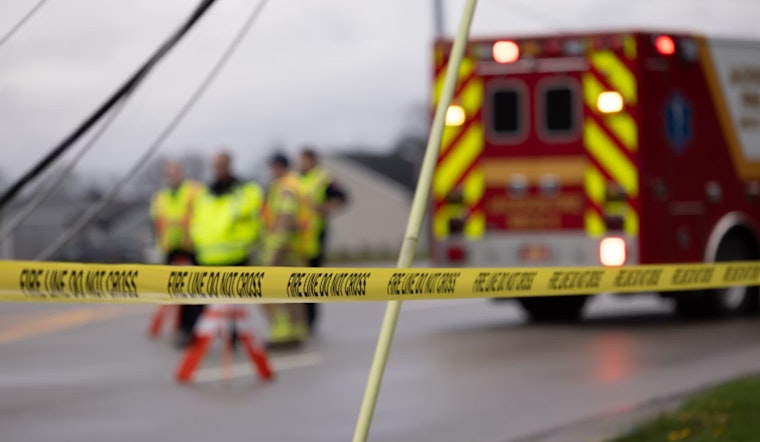
A Tesla Semi erupted into flames on Interstate 80 early Monday after veering off the road and crashing into trees, bringing traffic to a standstill for hours as emergency crews addressed the inferno and its hazardous aftermath. As reported by KCRA, the electric vehicle's battery fire released toxic fumes, leading to a closure of both eastbound and westbound lanes near the Emigrant Gap area of Placer County due to the potential danger of inhalation.
The incident unfolded around 3 a.m., and efforts to reopen the highway continued well into the evening as Cal Fire crews, alongside a hazardous materials team contracted by Tesla, battled the combustion of the lithium-ion batteries. The batteries, described by Cal Fire Division Chief Ryan Woessner in a statement obtained by KCRA, are known to "start feeding off each other and they catch fire," thus prolonging the fire as they exhaust their own energy in a destructive cycle. The driver of the truck survived the crash and was taken to a hospital, with the operations for extinguishing the vehicle persisting due to the battery maintaining a temperature of about 1,000 degrees according to CHP's measurements.
Eastbound drivers were kept at bay by officials for a minimum of half a mile from the scene, and westbound traffic faced similar detentions at Highway 20, with detours set up at Colfax. In a coverage by KMPH, State Assemblyman Tom Lackey issued a statement calling on the Governor to reconsider California's Advanced Clean Fleets mandate, citing this incident and a previous interstate closure as indicators the state might not be fully prepared for the ramifications of EV fires.
Despite the unprecedented nature of such an electric big rig fire, the hazardous incident served as a live drill for emergency crews, learning in real time alongside Tesla engineers. "This is new technology for us and we are learning with the engineers as we work through this process and the name of the game for us right now is to wait it out," Woessner explained in an interview. The objective, as it became evident, was to wait until the battery’s charge extinguished itself, a process that could take an indeterminate amount of time. As plans were made to transport the semi cab to Tesla's plant in Nevada, contrasting sentiments arose from within the trucking community itself. Angel Contreras, a trucker caught in the delay while hauling parts to Tesla, doubted the safety of electric semis, pondering the potential calamity of a similar fire within a city in statements reported by KCRA.





