

























































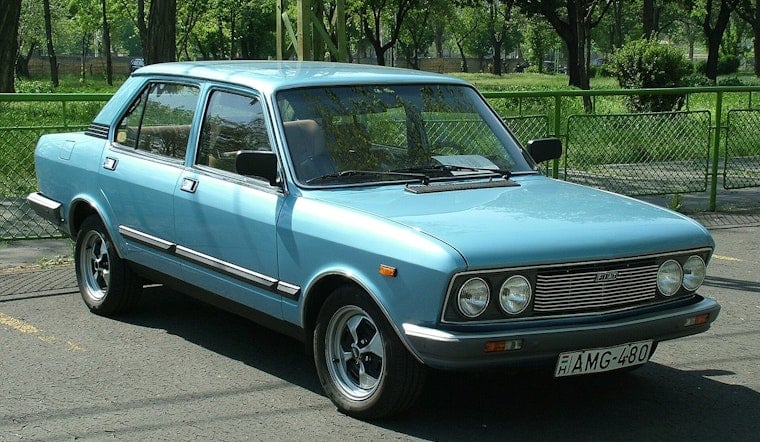
A bill that would let hundreds of thousands of aging California cars skip smog checks has cleared the state Senate for the second year in a row, reigniting a fight between classic car owners and public health advocates. Senate Bill 1392, nicknamed “Leno's Law 2.0” after television host and car collector Jay Leno, would gradually exempt qualifying vehicles manufactured before 1986 from smog inspections by 2032, but it must still survive the same Assembly committee that killed its predecessor last year.
According to the Sacramento Bee, SB 1392 is a bipartisan measure authored by Democratic state Senator Dave Cortese of San Jose and Republican state Senator Shannon Grove of Bakersfield that would reduce smog regulations on classic cars built after 1976. The bill would redefine what counts as a “collector motor vehicle,” allowing any car at least 35 years old that is insured as a collector vehicle and driven less than 1,000 miles per year to qualify, according to the Bee's reporting. It would also let special interest vehicles qualify, and it would strip away the current requirement that owners be legally defined as collectors under the California Vehicle Code to obtain smog exemptions, per the same report.
Cortese described classic cars as works of art representing craftsmanship and restoration, and said they are an important part of California's culture and history, the Bee reported. Leno, who has championed the measure, said classic car owners are not making their cars more dangerous and are simply trying to keep them exactly as they originally were, according to the outlet. He also said older-car owners may struggle to find stations equipped and staffed to perform smog inspections, adding that some owners keep driving their vehicles because they cannot locate a station willing or able to test them.
A Bill Built From Last Year's Failure
SB 1392 is a direct descendant of SB 712, which proposed a broad exemption from annual smog checks for vehicles manufactured before 1986 and would have required eligible cars to receive special historic-vehicle license plates and collector-motor-vehicle insurance, per the Bee. That earlier bill passed the California Senate 32-3 in June 2025, according to SEMA, but it was held and killed in the Assembly Appropriations Committee during end-of-session hearings that August over fiscal and environmental objections, as reported by Sierra Daily News. That defeat pushed the bill's authors to add explicit mileage caps and specialty insurance mandates for the 2026 rewrite, according to the same account.
Grove has said the amended bill addressed those compromises, the Bee reported. Under the new version, exemptions would expand each succeeding year based on a vehicle's manufacturing year, with full smog exemptions starting in 2027 for qualifying vehicles built before 1981, according to the outlet's reporting. If SB 1392 clears the Assembly Appropriations Committee, it will return to both the Assembly and Senate floors for further votes, and could eventually reach Governor Gavin Newsom's desk, per the Bee.
International and Grassroots Backing
The bill has picked up support well beyond Sacramento car shows. The Fédération Internationale de l'Automobile, the global governing body for world motorsports including Formula 1, formally endorsed SB 1392 in June, sending a letter to California lawmakers that described the proposal as a balanced approach to preserving automotive heritage while respecting environmental goals, according to CarPro. The organization emphasized that limited-mileage collector cars contribute minimally to total vehicle emissions, per that report.
Lowrider advocacy groups across California also organized a major grassroots push, submitting more than 1,700 position letters to state representatives in July arguing that maintaining obsolete emissions hardware imposes a disproportionate financial burden on people preserving historic cars in Latino and urban communities, according to a report cited by Hot Rod Magazine. SEMA has also backed the bill, noting that legacy testing equipment and original emissions replacement parts for 1970s and 1980s vehicles are becoming increasingly scarce at California service stations, since many station owners lack the diagnostic tools needed to test pre-OBDII vehicles.
Classic car aficionados have rallied around the effort in person as well. Classic car owners displayed their vehicles outside the Capitol, according to the Bee, echoing an April 2025 “Classic Cars at the Capitol” cruise on Sacramento's 10th Street where Leno spoke alongside state lawmakers on the Capitol steps.
Clean-Air Groups Warn Of Reversal
Opposition remains firm among public health and environmental organizations. Bill Magavern, policy director of the Coalition for Clean Air, has said the proposed changes would increase air pollution and create significant environmental impacts, according to the Bee, and separately warned that the bill would increase exhaust emissions damaging to human health. The Coalition for Clean Air, the American Lung Association, San Francisco Bay Physicians for Social Responsibility, and the California Air Pollution Control Officers Association have all opposed Leno's Law 2.0, per the outlet's reporting.
Brendan Twohig has said smog checks are an equitable way to achieve the emissions reductions needed for health-based clean-air standards, and separately said the bill would substantially increase air pollution, the Bee reported. The California Air Resources Board estimates that exempting the vehicles from future inspections would produce an additional 1.58 tons of nitrogen dioxide emissions, according to the same report. Bill advocates, meanwhile, have said the amended bill would have a negligible environmental impact, per the Bee's account. Leno has argued there are too few old cars on the road for the bill to make a meaningful environmental difference, and has said it would prevent classic car owners from being criminalized for limited driving.
How California Compares To Its Neighbors
The debate also touches on how California stacks up against nearby states. Nevada exempts pre-1968 vehicles entirely and waives testing for Classic Vehicle registrations driven up to 5,000 miles per year, while Arizona waives testing for collectible-insured vehicles in the Phoenix and Tucson metro areas, according to Hagerty. Bill advocates argue that California's stricter rules push classic car restoration businesses and owners out of state, per that report.
The numbers at stake are notable. Vehicles manufactured between 1976 and 1985 accounted for 117,862 registered smog checks in the 2023-24 model year, according to the Bee. Under current California law, qualifying collector vehicles manufactured after 1975 are already exempt from tailpipe emissions testing but must still pass functional fuel cap inspections and visual liquid fuel leak checks, per LegiScan's text of the bill. California's permanent pre-1976 smog check cutoff dates back to 2004, when Assembly Bill 2683 repealed the state's previous 30-year rolling exemption policy, according to California Legislative Information records.
Under the state's vehicle code, a collector is currently defined as an owner of historic vehicles or special interest vehicles, and a collector motor vehicle is defined as one used primarily for historical and display purposes and owned by such a collector, the Bee reported. Historic vehicles include cars over a century old or those with a specific historic engine type, while a special interest vehicle must remain unaltered from its original manufacture and be preserved as a leisure pursuit, per the outlet. Cars over 35 years old may already be exempt from specific portions of the smog test when legally classified and insured as collector motor vehicles, the Bee noted, though SB 1392 would go further by removing the collector-status requirement altogether.





.jpg)