

























































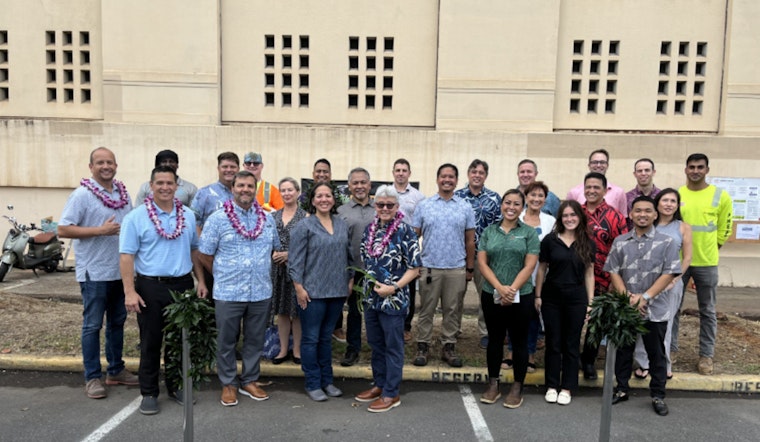
Honolulu is slated to begin construction on its second electric vehicle charging station funded by the National Electric Vehicle Infrastructure program. Set to break ground on Aloha Tower Drive, near Pier 7 on Oʻahu, the station is part of a federal push to expand the nation's electric vehicle infrastructure. According to the Hawaiʻi Department of Transportation, four 150-kilowatt chargers capable of both CCS and CHAdeMO ports will be installed in the Aloha Tower Marketplace complex.
The $2.5 million project is a joint effort between Hawaiʻi Department of Transportation and Hawai‘i Pacific University. With construction expected to wrap up by November, temporary closures, except for the Biki Station No. 109, are to be anticipated along Parker fronting Pier 7. Meanwhile, the first National Electric Vehicle Infrastructure-funded station on Maui has already facilitated over 5,000 charging sessions, potentially lessening carbon emissions by around 30,000 kilograms—equivalent to the carbon sequestered by 2,500 mature trees.
Aloha Tower's new chargers will match Maui's rates, costing EV owners $0.44 per kWh from 9 a.m. to 5 p.m. and $0.57 per kWh from 5 p.m. to 9 a.m. This price difference reflects a strategic move to encourage daytime charging when solar energy production peaks and electricity costs are lower. Federal Highway Administrator Shailen Bhatt praised Hawaii's initiative, stating, "These stations will join our national electric vehicle charging network to bring more charging stations to communities all along America’s highways," as reported by the Hawaiʻi Department of Transportation announcement.
In alignment with Hawaiʻi's goal of 100 percent clean energy by 2045, this expansion of charging infrastructure signifies both an environmental and technological stride for the state. "Availability of charging infrastructure is a critical component to increasing adoption of electric vehicles," Hawaiʻi Department of Transportation Director Ed Sniffen told in the announcement. The National Electric Vehicle Infrastructure program itself is part of a wider, bipartisan infrastructure bill that puts $1.2 trillion towards national transportation and infrastructure, including $550 billion for new investments like these electric vehicle stations.





