

























































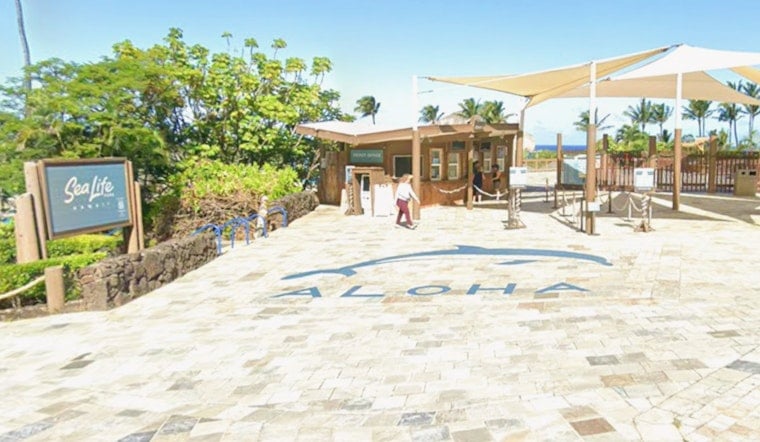
Sea Life Park Hawaii, the 62-year-old oceanarium overlooking Makapuʻu Point in Waimanalo, has a new owner: the Council for Native Hawaiian Advancement. The nonprofit's for-profit arm, known as the Hawaiian Council, has acquired the marine park from Herschend Family Entertainment for an undisclosed sum, taking over a facility that employs roughly 100 people and sits on state-owned land near one of Oahu's most scenic coastal drives.
The purchase was first reported by the Honolulu Star-Advertiser, which detailed how Hawaiian Council tapped Valerie King, who retired from the park in 2023, to lead the transition back into day-to-day operations. The park will continue to be run by Attractions Hawaiʻi, a subsidiary of Hawaiʻi Holdings & Investments, which the Star-Advertiser reports oversees the commercial enterprises supporting Hawaiian Council's community initiatives. Hawaiian Council says operations will continue uninterrupted, with dolphin, sea lion, reef shark and Hawaiian reef fish programs unaffected during the changeover.
Sea Life Park sits on 105.9 acres of state-ceded public land in Waimanalo, operating under a sublease from Hawaii Pacific University, which holds the master lease from the Department of Land and Natural Resources, according to Honolulu Civil Beat. Per the Star-Advertiser, Hawaiian Council has obtained a long-term lease for the property and says it will work closely with Hawaii Pacific University, the state and other partners as it moves forward. The DLNR-managed leasehold structure has historically required periodic regulatory approvals for commercial sub-leases, a framework that will continue to shape how the new owner can develop the site.
From Tap Pryor's Dream to a Corporate Carousel
Sea Life Park opened in 1964, founded by Taylor A. “Tap” Pryor, who had studied sharks as a graduate research assistant at the University of Hawaii. The park reported 800 paid visitors a day in its opening year with a 70-person payroll, and was projected in 1966 to reach 400,000 visitors annually, the Star-Advertiser reports. Its founding organization, the Oceanic Foundation, went bankrupt during the 1970s, setting off decades of ownership turnover.
Christian Wolffer bought Sea Life Park and Waimea Falls Park in 1996 before filing for Chapter 11 bankruptcy reorganization of the properties in 2001. Dolphin Discovery of Cancun purchased the park in 2005 and sold it to Palace Entertainment in 2008. According to the Star-Advertiser, Palace once planned a $30 million redevelopment that would have added a green sea turtle conservation center, a volcano-themed shark exhibit and restoration of part of Kaupō's historic fishing village, but that construction was postponed. Herschend Family Entertainment, the company behind Dollywood and Silver Dollar City, folded Sea Life Park into its holdings when it completed its acquisition of Palace Entertainment's 24 U.S. attractions from Spain-based Parques Reunidos in May 2025, according to Herschend. That ownership lasted little more than a year before the sale to Hawaiian Council this month.
Weaving Kaupō's History Into the Visitor Experience
The park has historical ties to the Indigenous fishing community of Kaupō and the surrounding Makapuʻu area, and Hawaiian Council intends to incorporate Native Hawaiian culture, history and traditional knowledge into the visitor experience, per the Star-Advertiser. Those ambitions echo commitments made during a 2023 Honolulu City Council review for a Special Management Area permit, when park master planners outlined designs to re-theme facility spaces to honor Kaupō, according to the Department of Land and Natural Resources. Waimanalo community members had previously advocated for cultural monitors and authentic historical representation at the site.
Hawaiian Council CEO Kūhiō Lewis said the visitor experience will emphasize cultural enrichment, education and storytelling. The company plans to invest in cultural programming, landscaping, food offerings and visitor experiences, including enhanced landscaping with native Hawaiian plants and expanded cultural storytelling, educational programming and hands-on demonstrations, the Star-Advertiser reports. Chef Roy Yamaguchi will overhaul the park's food offerings, and Hawaiian Council plans to fill vacancies in general management, sales and marketing and cultural staff positions.
A Council Built on Economic Sovereignty
The Kapolei-based Council for Native Hawaiian Advancement, certified by the U.S. Treasury as a Native Community Development Financial Institution and by HUD as a housing counseling agency, adopted a model of economic sovereignty three years before the Star-Advertiser's report. Lewis said the organization has lost millions in federal funds through administration cutbacks and declined funding opportunities, a pressure that has pushed it further into commercial ventures. The council says it is almost 100% free of federal money, with revenue from its for-profit ventures supporting housing, job creation, workforce development, lending capital and emergency assistance.
Sea Life Park now joins a rapidly growing entertainment and hospitality arm that the Star-Advertiser reports has expanded since 2023. Hawaiian Council operates Sea Life Park and its other ventures through a for-profit subsidiary that has acquired Hawaiʻi Stage in 2024 and Na Mea Hawaiʻi in 2025, launched the Na Lei Aloha Luau at the Hyatt Regency Waikiki Beach in 2024, and opened Kaʻula Lūʻau at Ko Olina this past February. The council is also targeting a December debut for “Hawaiian Goddess: The Epic Tale of Hiʻiaka.” Across its business enterprises, Hawaiian Council now has roughly 600 employees, according to the Star-Advertiser.
Part of a Broader Statewide Shift
The council's tourism division, Kilohana, secured a multiyear $27 million destination stewardship contract from the Hawaiʻi Tourism Authority in 2023, a deal that TravelAge West connected to a broader institutional push by CNHA into destination management. Kilohana went on to launch the Kilohana Hula Show at the Waikiki Shell in February 2024, reviving the legacy of the historic Kodak Hula Show, according to Hawaii Public Radio, which described it as the first Waikiki hula show developed and produced directly by a Native Hawaiian organization. By late 2024, Native Hawaiian executives held top leadership positions across state tourism, cultural and land stewardship entities, a trend that Honolulu Civil Beat says community leaders have described as a shift from grassroots activism to executive decision-making.
The council's growth hasn't been limited to Oahu attractions. In July, Hawaiian Council secured a two-year lease for three acres at the former Outlets of Maui site in Lahaina to develop ʻUlu o Lele, an $8 million interim marketplace for local businesses and artisans affected by the 2023 wildfires, as Aloha State Daily reported — a project Hoodline covered as part of its ongoing look at Lahaina's remembrance and recovery efforts. For now, Sea Life Park's operations continue as usual for visitors driving the Makapuʻu coastline, a stretch of Kalanianaʻole Highway that Hoodline reported was shut down in both directions in March after a major sinkhole exposed the corridor's ongoing infrastructure vulnerabilities.





