

























































In Cook County, an investigation by the Chicago Tribune and Illinois Answers Project has exposed significant issues with the Cook County Assessor's office, revealing a troubling pattern of misclassification and underassessment of properties. The Assessor's office, led by Fritz Kaegi, apparently overlooked hundreds of millions of dollars in market value, impacting property taxes across the county.
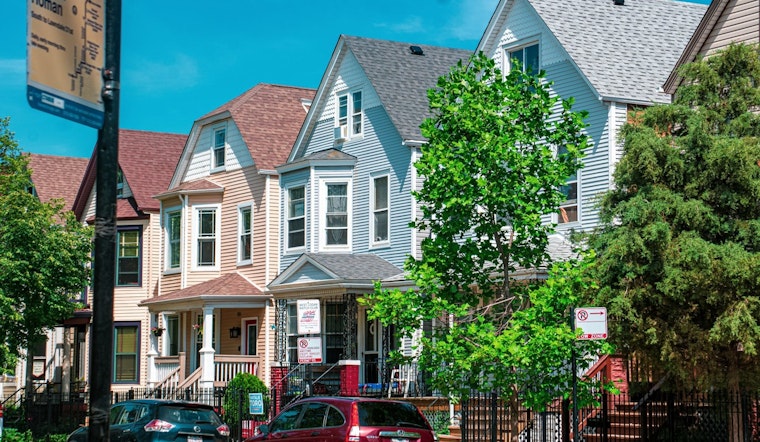
Errors by the office have not gone unnoticed by homeowners, as exemplified by the experience of Denise Gilmore of Humboldt Park. Her property tax bill has climbed more than 60 percent over 14 years without any significant renovations to her home. This stands in stark contrast to some of her neighbors living in markedly newer and more valuable homes who are benefiting from inaccurate assessments that substantially understate their property's worth. For instance, an $843,000 home across the street was taxed as a mere vacant lot at only $44,280, revealed data obtained by the two news organizations.
These investigative efforts employed various resources, including public data portals, satellite imagery, and FOIA requests to gather comprehensive evidence of the assessment inaccuracies. The findings are striking, with the Assessor’s office having missed at least $444 million in value for the 2023 tax year, affecting 620 properties. The audit said to be conservative, focused only on a single year's worth of property that was inaccurately assessed, with the majority of the properties in question off the tax rolls for multiple years.
The Assessor's office contends that the oversight represents a minimal fraction of the county's nearly $200 billion in taxable value. However, tax experts argue that such mistakes erode trust in the system and unfairly distribute the tax burden. "If your property is assessed artificially low … someone else is going to have to make up that portion of the (tax) levy that you would pay," Chris Goodman, a public administration associate professor at Northern Illinois University, told the Chicago Tribune.
Kaegi's office has acknowledged the problem, which it claims to be addressed through improvements in processes and technology, including the use of satellite imagery. Despite these assertions, the Assessor has yet to offer a comprehensive solution, and an action plan responding to the broader issue remains to be seen. Kaegi has stated his intention to conduct an internal audit and change protocols to ensure properties with active building permits are inspected more reliably. "We’re proud of what we’ve done, but we know it can always be improved," Kaegi said.





