

























































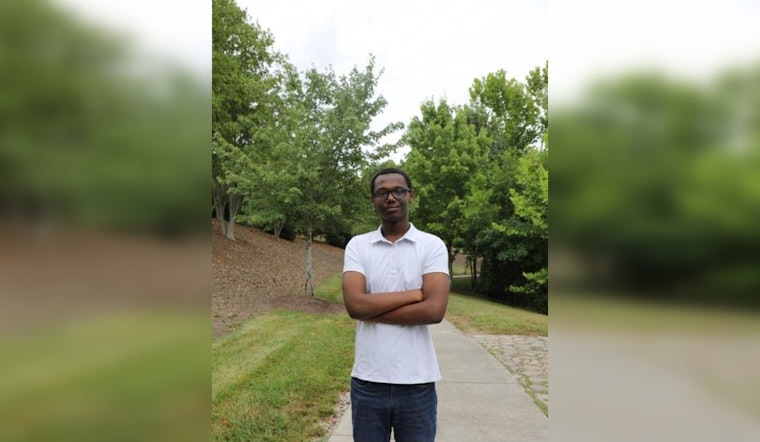
In cybersecurity, new solutions are always needed to tackle the evolving threats of cybercrime. High school student Elton Aba is exploring an innovative approach inspired by biological processes to improve cybersecurity. During a summer internship at the Department of Energy’s Oak Ridge National Laboratory (ORNL), Aba worked with senior cyber researcher Nate Evans to explore how nature’s defense mechanisms can be applied to the digital world, as per the Oak Ridge National Laboratory's official website.
Aba, a junior at Bearden High School in Knoxville, has fostered an interest in cybersecurity after immersing himself in computer science classes provided by his school. Post a visit to ORNL and nudged by a teacher's encouragement, Aba applied for and was accepted into the competitive internship program at the lab. "Artificial immune systems, model biological immune systems," Aba said in a statement obtained by Oak Ridge National Laboratory. He went on to explain the analogy by equating skin to a firewall or an intrusion detection system, deeming it a primary defense in both biological and computer networks.
One particular model of biological efficiency Aba examined was the behavior of ants in sourcing food and signaling to others. This natural phenomenon sparked a comparison to the detection of cybersecurity threats within a large system. "You could have this swarm of individual sensors looking through your system, trying to find an anomaly, and when one sensor determines there is something odd going on, it would attract other sensors to come and look at it from different perspectives," Aba told Oak Ridge National Laboratory.
Applying bio-inspired cybersecurity solutions is challenging due to the complexities of mimicking biological defense systems. However, the need for such research is clear, with the Internet Crime Complaint Center reporting $12.5 billion in cybercrime losses over the past year. UT-Battelle, which manages Oak Ridge National Laboratory for the DOE’s Office of Science, supports this research to tackle the significant challenges of our time through scientific inquiry.





