

























































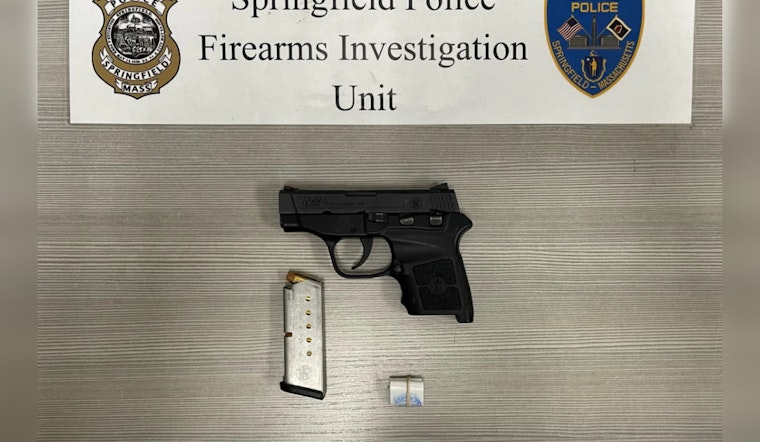
Springfield Police Department's Firearms Investigation Unit executed a strategic takedown on Wilcox Street last night, resulting in the seizure of a loaded firearm and narcotics, and three arrests. According to a press release from the Springfield Police, the operation was led by Sergeants Christopher Hitas and David Robillard, concluding a lengthy investigation into drug activities on the block.
Around 7 p.m., surveillance efforts paid off when detectives witnessed a drug deal. They sprang into action, flashing their lights and stopping the suspect, Rafael Santaella, on Wilcox Street. His accomplice, Xavier Nazario, was also detained, while a third suspect, Kyle Allaire, attempted a swift escape in a vehicle that was promptly stopped on Chestnut Street. During the follow-up investigation, detectives found heroin in Allaire’s possession, and Santaella, a repeat offender, was found armed with an illegal weapon.
The recovered items from the operation comprised heroin, a potent yet all too common substance in the web of narcotics that entangles our streets, and an illicit firearm which, considering its lethal potential, underscores the risks law enforcement faces in their day-to-day duties. The trio of suspects, with their varied criminal backgrounds and charges, paint a complex portrait of crime; Santaella, 29, of Springfield, is no stranger to the judiciary with past convictions for similar offenses and is now facing multiple charges, including carrying a firearm without a license, firearm violation with one prior violent or drug crime, distribution of a Class A drug on subsequent offense, and several others.
Nazario, 33, who is currently homeless, faces conspiracy to violate drug law and an assault charge, painting a picture of how homelessness may intersect with criminal behavior and the myriad challenges such individuals face in society; Allaire, 32, of Chicopee, is not without his own list of legal burdens, including possession of a Class A drug and a default warrant for larceny of a motor vehicle demonstrating that crime often doesn't exist in isolation but as a tapestry woven with various threads of prior individual histories and acts.



