

























































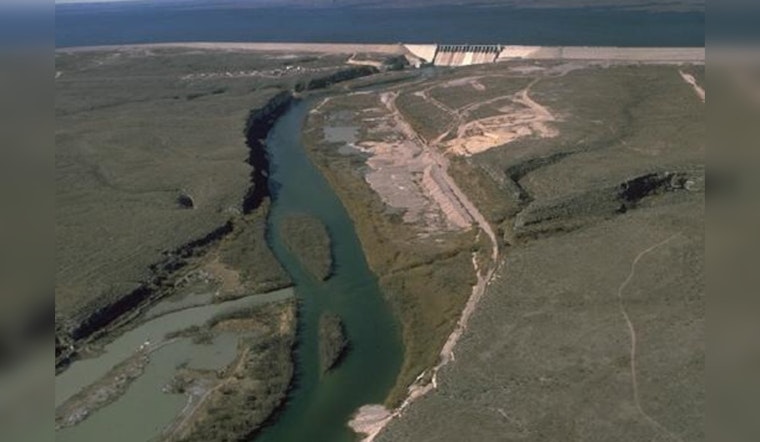
The Rio Grande's dwindling water levels are often blamed on Mexico's deficits in water deliveries. Yet, new data underscores a broader, more systemic issue – one that originates from within U.S. borders and longstanding commitments are being pored over again.
Recent findings by the International Boundary and Water Commission (IBWC), as reported by The Texas Tribune, reveal that the U.S. contribution to the Rio Grande has substantially dropped. The Amistad and Falcon international reservoirs are sitting alarmingly low at 19% and 12% capacity – and it's not just a foreign affair. Looking back to the 1980s, the reduction in water from the U.S. side of the river has gradually intensified, hitting a 33% decrease at the Amistad Reservoir and a 21.5% decrease at the Falcon Reservoir over the decades.
IBWC Commissioner Maria Elena Giner spotlights a stark reality, with 90% of the region's water supply dependent on a compromised river. "This is something they really need to look at, as far as how they're going to build drought resiliency in the region," Giner told The Texas Tribune. The revelation has prompted a surge of interest in alternative water sources among local supply corporations.
With a sense of urgency, Texas State Rep. Janie Lopez has called for the Legislature to turn to "common sense and innovative solutions." A billion-dollar Texas Water Fund has been earmarked to revamp water infrastructure, and just last week, the Texas Water Development Board outlined plans for its allocation. Lopez's focus on diversification was echoed in her statement obtained by The Texas Tribune.
However, Mexico's compliance with the 1944 treaty, which dictates bi-national water sharing, remains a critical concern for U.S. officials. The current cycle nears its end in October 2025, with Mexico falling short by roughly 900,000 acre-feet. Strained by their own drought, Mexican representatives face pressure from proposals that could potentially link water deliveries with federal aid. Congressman Vicente Gonzalez, noting the water crisis that echoes throughout local communities, has underlined the importance of utilizing the IBWC's findings to strengthen U.S. water infrastructures and secure Mexico's adherence to water delivery schedules, as he proclaimed in a statement shared by The Texas Tribune.
As ongoing dialogues continue, a proposed amendment to the original treaty is being discussed. The aim is to create a framework that encourages Mexico to release water from its reservoirs and not just rely on spillage during heavy rains, ensuring a more reliable and consistent supply of water at an annual pace.





