

























































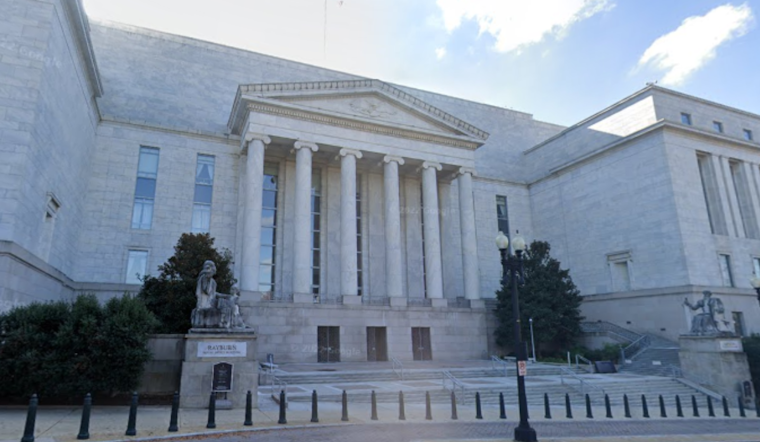
The House Judiciary Committee, together with its Subcommittee on Immigration Integrity, Security, and Enforcement, recently uncovered details about the case of Jose Leonardo Marquez-Marquez, a Venezuelan national arrested at the U.S. Capitol. Marquez-Marquez was found on the grounds with a machete, having already crossed into the U.S. illegally and been released into the country during the Biden-Harris administration. This event has sparked discussion surrounding the administration's immigration policies and their ramifications.
According to the House Judiciary Committee, Marquez-Marquez was apprehended on August 21, 2022, after illegally entering the United States at the Eagle Pass International Bridge. Despite having the capacity to detain him, Border Patrol opted to quickly release him, a decision that has led critics to now openly question the operational judgments made under the current administration's immigration approach. Marquez-Marquez, who had listed Washington, D.C., as his address with no point of contact, was swiftly released to the general public.
Data from the Department of Homeland Security (DHS) indicated that there was indeed sufficient detention capacity at the time of Marquez-Marquez's release. Fourteen months following his release, Marquez-Marquez was issued a Notice to Appear before an immigration judge. During this check-in, ICE issued a warrant for his arrest and flagged him as a priority for arrest and removal. Yet, even with these determinations, ICE released Marquez-Marquez on his recognizance under certain conditions.
The details surrounding Marquez-Marquez’s subsequent arrest on Capitol grounds serve to amplify the ongoing critique of the Biden-Harris immigration policies. The incident has been leveraged by opponents as a stark example of the potential threats posed by what they deem as "open-border" stances. The report highlights that, despite being a marked enforcement priority, Marquez-Marquez was allowed to remain free, raising alarms about the current oversight and enforcement mechanisms.





