

























































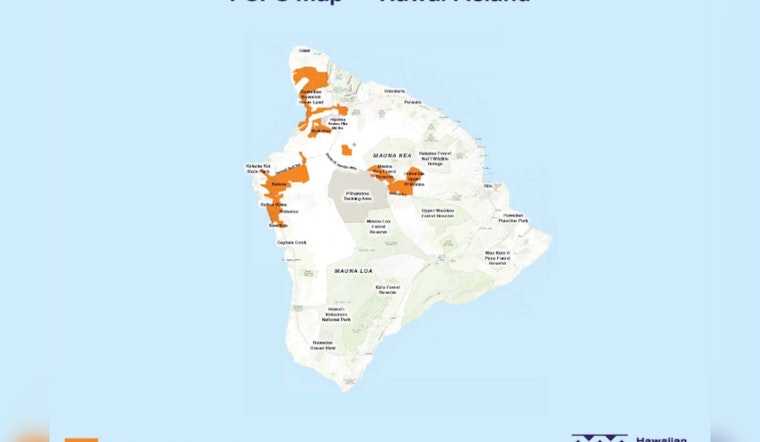
The recent introduction of Hawaiian Electric's Public Safety Power Shutoff program has sparked a range of reactions among residents of Hawaii's Big Island. A poll conducted by Big Island Now found that opinions are deeply divided on the measure designed to prevent wildfires. With a sample of over 900 individuals participating, 34 percent expressed concern that the Public Safety Power Shutoffs could put people at risk by cutting off electricity needed for medical supplies, while 19 percent saw no clear solution to ongoing wildfire threats but showed a willingness to consider the program.
Despite these concerns, there are also voices of support. Social media commenter and Big Island resident Susan A Regeimbal acknowledged the trade-offs involved, saying, "I would think losing power would be preferable to losing you home, life, or livelihood! I am sure Lahaina would have gladly sacrificed power to prevent the tragedy that occurred." However, the prospect of proactive power outages has others worried about the collateral effects, as another commenter, Theron Dauchy, raised concerns about the impact on water supplies for firefighting, stating, "I’m concerned about the water for firefighting being turned off as the pumps are electric," as per Big Island Now.
The Public Safety Power Shutoffs initiative, which went into effect on July 1, allows Hawaiian Electric to shut off power preemptively in high-risk wildfire areas when certain conditions – such as strong winds, low humidity, and dry vegetation – are present. Its implementation, as detailed on the Department of Water Supply website, is intended as a last resort for community protection.
While some residents have raised questions about the effectiveness and necessity of the Public Safety Power Shutoffs, the program's goal is to mitigate the risks of wildfires that have been increasing in frequency and severity. As the debate continues, Hawaiian Electric has provided resources, such as a dedicated Public Safety Power Shutoffs hotline and a website for customer service inquiries. The impact of these power shutoffs extends to various sectors, affecting traffic signals, and even the Department of Water Supply's ability to pump water, which relies on the commercial power provided by HECO. In preparation, the Department of Water Supply's encourages residents to have alternative water sources on hand and has made emergency water storage guidelines available to the community.
In sum, the diverse opinions on the Public Safety Power Shutoffs program reflect a community grappling with complex choices in the face of natural disaster risk. Whether viewed as a cautious approach to wildfire prevention or a potential risk to other life-saving services, the conversations around Public Safety Power Shutoffs are likely to continue as stakeholders collaborate to find a balance between safety and service disruption.





