

























































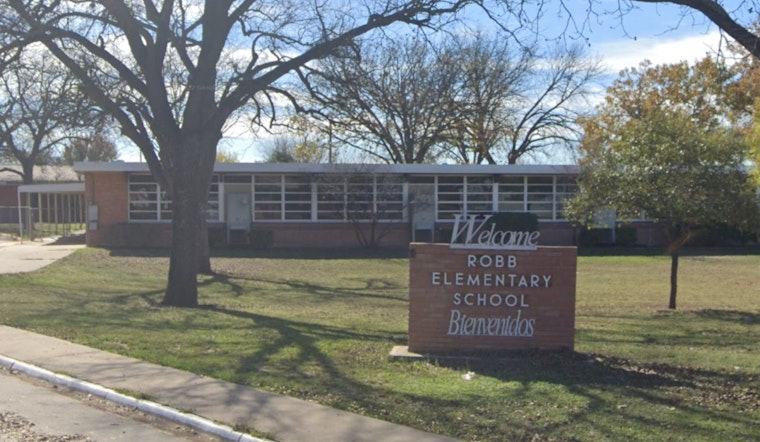
U.S. Customs and Border Protection (CBP) has released the investigative results from the Office of Professional Responsibility’s review of the agency's response to the mass shooting at Robb Elementary School in Uvalde, Texas. In the report published yesterday, CBP emphasized their commitment to improving responses to critical incidents, stating, "Our report indicates, we are committed to, and working with our federal, state, and local partners to ensure that our brave officers and agents have effective training, policy guidance, equipment, and legal authority to respond to critical incidents," as per a statement obtained by CBP. The investigation concluded with no CBP personnel found to have violated any rules or laws during their response to the tragic event on May 24, 2022.
According to the findings, the CBP response to the Uvalde shooting involved immediate action from local CBP personnel, many of who were residents of the community. However, the report highlighted several organizational and scene management challenges, notably a lack of clear command and control and gaps in training for such critical incidents. Reflecting on the need to properly address these issues, CBP Senior Official Performing the Duties of the Commissioner Troy A. Miller told CBP, "The loss of innocent lives and the enduring emotional scars borne by the survivors, families, community, and first responders are immeasurable." CBP's OPR special agents conducted an intricate review process, involving over 200 interviews and thousands of hours of video review, to ensure a thorough understanding of the events and to identify necessary changes in procedure and training to prevent future lapses.
The investigation also pinpointed significant gaps in the understanding of CBP personnel’s legal authorities when responding to non-federal emergencies, including active shooter situations. It brought to light that under current laws, CBP personnel may only exert authority equivalent to that of a private citizen in such instances, as reported on CBP's website. In addition to the confusion over legal authorities, the report criticized the lack of coordination among the various law enforcement agencies present on the scene, leading to significant delays and potential further loss of life.
In response to the findings, CBP has begun to reevaluate and improve its policies and training, explicitly focusing on breaching tactics required to engage an armed suspect behind locked doors. CBP also plans to address the lack of a command and control framework, which contributed to the confusion at the scene. New policy directives have been issued to agency personnel to clarify their legal authority in rectifying mass-casualty or active threat critical incidents, and CBP is now pursuing legislative changes to better define their role in such emergencies. Moreover, specialized training on the Federal Emergency Management Agency's Incident Command System protocols is underway to ensure better responses to dynamic incidents.
In conclusion, CBP is taking steps towards remedying the shortcomings exposed by the Robb Elementary School tragedy. These actions reflect CBP's dedication to reinforcement of their readiness and their commitment to the Uvalde community. For a more detailed look into the investigative process, findings, recommendations, and CBP's planned actions, the complete report can be accessed on the CBP website.





