

























































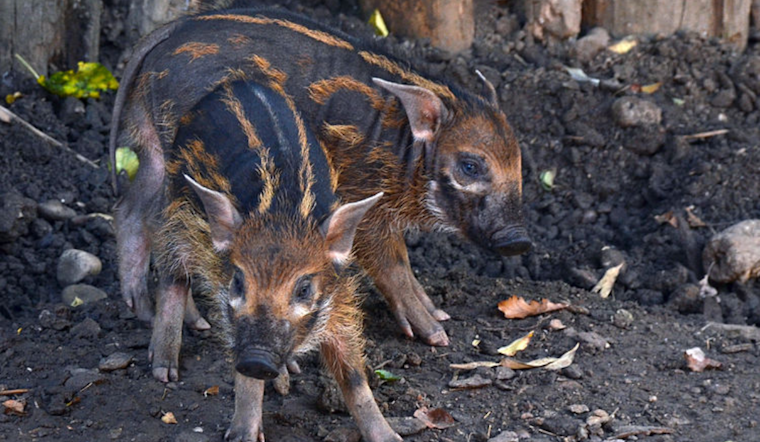
In a delightful surprise at the Cheyenne Mountain Zoo, a newborn Red River Hog has made an unexpected appearance, as announced by the zoo officials on Thursday morning. The adorable addition was born to parents Gus and Finn, with 8-year-old Finn becoming a mother for the first time. According to KKTV, the zoo staff had suspected breeding activities but were not certain a baby hog was on the way.
Amy Tuchman, a senior keeper in the African Rift Valley, couldn't hide her excitement about the new arrival. "It may seem strange to some, but Red River hog babies are some of the cutest in the whole animal kingdom with their striped markings, tiny statures, and energetic behaviors," she said, as per FOX21 News. The newborn, described as slightly smaller than its mother’s snout, sports a distinct "watermelon pattern," a series of stripes and spots that are expected to fade as it ages.
The hoglet, which will not be named until at least 30 days following the zoo tradition, is still a mystery regarding sex, which the zoo staff hopes to determine in the coming weeks, as detailed by Denver7. For the moment, the animal care team is hands-off, allowing mother Finn and her baby to bond naturally, only intervening if there is a medical need.
Observing the mother and baby, Tuchman said, as obtained by FOX21 News, "We're seeing a lot of nursing, napping, and activity from the baby. It likes to climb over Finn's face, and we've seen it jumping and running when it gets little bursts of energy." She also mentioned that Finn has been "really sweet and patient" with her newborn. The father, Gus, will be introduced to the baby once Finn has had ample time to establish a strong bond with the hoglet, a crucial step for the family unit.
For now, the zoo celebrates the birth of the hoglet as a moment of joy and wonder, inviting guests to visit and witness the early days of the new member's life. This new bundle of cuteness joins the list of attractions at the Cheyenne Mountain Zoo, adding to its charm and educational value, as children and adults alike get to learn more about the species and their unusual yet fascinating development.




