

























































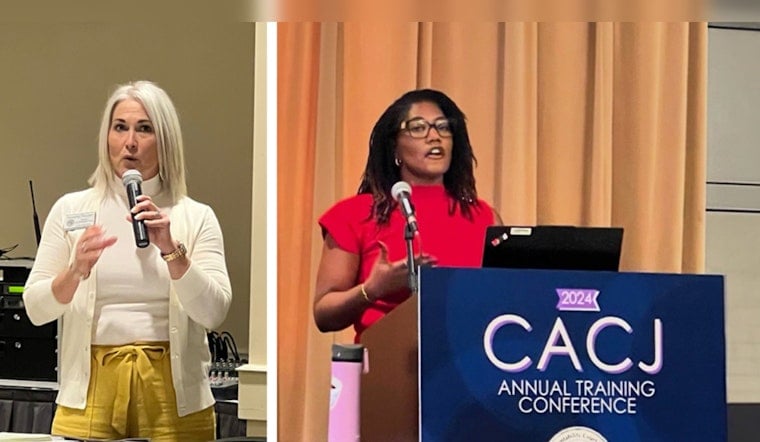
In a recent showcase of innovation and expertise within the realm of Georgia's judicial system, Cobb County's very own Jennifer Tillery, Accountability Court Director, along with Drug Court Coordinator Porsha Winfrey, stepped into the spotlight at the state's Council of Accountability Court Judges’ Conference, as reported by Cobb County News. Addressing over 200 professionals, their presentation underscored the nuanced mechanisms of Cobb’s Medication for Addiction Treatment (MAT) Program, an initiative providing free medication and additional medical services to participants in treatment court.
The MAT initiative, being one of the pioneering efforts in Georgia, showcases how a symbiotic partnership between treatment courts, healthcare providers, and pharmacies can enhance participant contentment and program retention—the takeaways from Tillery and Winfrey resounded with the audience—it's the second instance this year where they’ve been elected to divulge their approaches to peers across the state. From her experience, Tillery, alongside Greg Wilson from the Carl Vinson Institute of Government, further shared insight into forging sustainable relationships with community business partners imperative for participants' employment and, by extension, their reintegration success.
Integrating patient care and judicial oversight, Dr. Shonali Saha, a physician specialized in both internal and addiction medicine, joined the discourse, weaving a deeper understanding of the MAT Program benefits. As Cobb County News highlights, this pioneering model of care and partnership has significantly propelled satisfaction and retention metrics among participants, potentially guiding other state jurisdictions in similar pursuits of reformative justice.
The progressive approaches of Cobb’s Accountability Courts, which alternate incarceration with rigorous yet supportive 18–24-month programs, leverage close supervision and evidence-based treatment, these methods help offenders with substance use and mental health disorders to hold themselves accountable and strive to serve the community they are a part of, rolling into its twenty-second year, the program's commitment to education assistance and workforce development training was prominently shared by Tillery and Wilson, underlining that such ancillary services are cornerstones in ensuring participants not only secure employment but also thrive post-graduation.





