

























































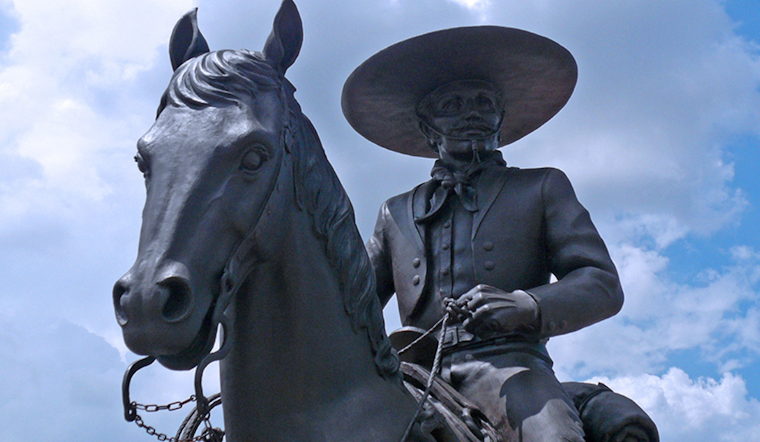
There's a towering nod to Fort Worth’s rich history at the intersection of North Main Street and Central Avenue, and it's been commanding attention since 2012. A 10-foot bronze sculpture, the 'Vaquero de Fort Worth,' acts as a sentry between the bustle of downtown and the giddy-up charm of the historic Stockyards. Its origins and significance go back a long way—encapsulating a narrative of art and heritage distilled into a puppet by and for the community it represents.
Commissioned by the City of Fort Worth, the piece celebrates the Mexican cowboys' influence on the local cowboy culture and economy. According to a plaque by the installation, “The vaquero, or ‘cowman,’ is a skilled mounted horseman whose stock-tending techniques significantly contributed to the ranching tradition dating back centuries. Originating in Mexico during the Spanish colonial period and continuing into the trail-driving era of the 19th century, the vaquero shaped the working methods of the modern-day cattle industry.” They weren’t just herders; these vaqueros were pivotal in driving cattle through Texas' infamous Chisholm Trail, which, by no coincidence, sauntered right through Fort Worth.
A juicy tidbit shared by Jenny Conn, Fort Worth Public Art collection manager, reveals that the Fort Worth City Council gratefully accepted $111,000 in privately raised funds to bring this sculpture from a mere concept to its full bronze glory, in a statement detailed by Fort Worth's official news. Hatched by the Vaquero Committee under the guidance of Judge Manuel Valdez and the sculpting hands of North Texas artists David Newton and Tomás Bustos, this piece was conceived back in 2003 and unfurled its figurative wings in response to a city's desire to honor its Mexican American culture and history.





